
El Comercio De La República - Hormuz Shock Risk rising

Lima -

Hormuz Shock Risk rising


In the narrow waters between Iran and Oman, the world’s most important energy choke point has turned into the epicenter of a fast-moving economic threat. What began as a military escalation has morphed into something markets fear even more: a sustained disruption of maritime traffic through the Strait of Hormuz—an artery that, in normal times, carries a staggering share of global oil and liquefied natural gas flows.

Over just days, the strait’s risk profile has shifted from “tense” to “near-uninsurable.” Commercial ship operators have slowed, paused, or rerouted voyages. Tankers have clustered in holding patterns. War-risk premiums have jumped. Freight rates have surged. For energy importers and manufacturers far from the Gulf, the shock is already spreading through prices, delivery schedules, and financial expectations.

The question is no longer whether the world can absorb “higher oil for a week.” The question is whether the world is about to relearn a harsher lesson: when Hormuz is threatened, the global economy doesn’t just pay more—it changes behavior, and that behavioral shift can snowball into a broader, longer-lasting disruption.

Why the Strait of Hormuz matters more than any headline
The Strait of Hormuz is not merely a strategic symbol; it is an economic switchboard. A significant portion of the world’s seaborne crude oil and petroleum products transits these waters, alongside a major share of global LNG shipments. Even brief interruptions can tighten supply immediately because many refineries and power systems are designed around steady inflows, not sudden reroutes or prolonged delays.

Yes, some producers have partial bypass options—pipelines that move oil to ports outside the Gulf—but those alternatives are limited and cannot replicate the strait’s full capacity at short notice. That structural bottleneck is why any serious threat to freedom of navigation in Hormuz instantly becomes a global pricing event.

What “attacking Hormuz” looks like in practice
A disruption does not require a formally declared blockade. It can be achieved through a blend of tactics that make commercial passage too dangerous or too expensive:

Direct strikes or attempted strikes on vessels near the transit corridor.

Drone and missile pressure that forces ships to switch off tracking, scatter, or delay.

Threats against shipping that deter crews, owners, and charterers.

Mine-laying risk—even the suspicion of mines can freeze traffic, because clearing operations are slow and technically demanding.

Targeting port and coastal infrastructure in the wider region, creating downstream bottlenecks even if some vessels still attempt passage.

In the shipping world, perception becomes reality. If underwriters cannot price risk with confidence, coverage is withdrawn or priced so high that voyages become uneconomic. When insurers step back, lenders, charterers, and operators follow—often within hours.

The immediate market mechanics: from fear to scarcity
Energy markets move on marginal barrels and marginal cargoes. When a major corridor is disrupted:

1. Spot prices react first. Traders price in expected shortages and scramble for alternatives.

2. Physical cargoes re-route or stall. That introduces real scarcity, not just financial speculation.

3. Refiners bid more aggressively for replacements. The same barrels get chased by more buyers.

4. Storage and strategic reserves become bargaining chips. Governments consider releases; companies hoard.

5. Volatility becomes the product. Uncertainty lifts option premiums and hedging costs, which feed back into consumer prices.

Even countries that do not buy Gulf oil directly still feel the impact because oil is globally priced and globally substituted. If one region’s supply tightens, another region’s barrels get pulled toward the highest bidder. The result is a synchronized, worldwide repricing.

The second-order shock: LNG, power prices, and industrial stress
Oil grabs headlines, but LNG often delivers the sharper economic pain. Gas markets are increasingly global, yet still constrained by liquefaction capacity, shipping availability, and terminal infrastructure. When LNG cargoes are delayed, power utilities and large industrial users face immediate dilemmas:

- pay extreme spot prices,

- switch fuels (where possible),

- curtail operations,

- or pass costs through to households and businesses.

Energy-intensive sectors—chemicals, fertilizers, metals, cement, and some food processing—can experience sudden margin collapse. That’s how an energy shock migrates into inflation, employment pressure, and weaker growth.

Shipping and supply chains: the hidden multiplier
A Hormuz disruption is not only an “energy story.” It is a logistics story with compounding effects.

If carriers divert around longer routes, costs rise through:

- extra fuel burn,

- longer transit times,

- crew and vessel utilization strain,

- congestion at alternative hubs,

- and surcharges for security, insurance, and war risk.

Those delays hit everything: components, pharmaceuticals, electronics, industrial inputs, and consumer goods. Businesses that operate “just-in-time” inventories suffer first; small suppliers and retailers often suffer hardest because they lack bargaining power and buffer stock. In modern supply chains, time is money—and disruption is inflation.

The inflation problem: central banks get boxed in
A severe Hormuz shock creates a policy nightmare. Higher energy and transport costs push inflation up, while uncertainty and curtailed demand push growth down. That mix can resemble “stagflationary” conditions, where:

- consumers face higher bills,

- companies face higher costs,

- investment slows due to uncertainty,

- and central banks struggle to choose between fighting inflation or supporting growth.

Even if the initial spike fades, the volatility itself can keep inflation expectations elevated—especially if businesses begin building “risk premiums” into pricing and wage negotiations.

Financial markets: stress travels faster than oil
Markets do not need months to react. They reprice risk instantly:

Energy and defense assets can surge.

Airlines, logistics, and heavy industry can come under pressure.

Emerging markets that import energy may see currency weakness and higher financing costs.

Credit spreads can widen if investors fear recession or persistent inflation.

A key vulnerability is the intersection of energy prices and debt. Many governments and companies refinanced during periods of lower rates and calmer conditions. If energy-driven inflation keeps rates higher for longer, or if recession risks rise, debt sustainability questions re-emerge—especially for import-dependent economies.

Who is most exposed?
Exposure is not purely geographic. It is structural.

- Major Asian importers are highly sensitive due to scale and reliance on seaborne energy.

- Energy-poor economies with limited strategic reserves feel price spikes fastest.

Industrial exporters suffer when input costs rise and shipping slows.

- Low-income households face the harshest real-world impact as energy and food costs rise.

Food becomes a late-stage amplifier: energy prices raise fertilizer and transport costs, which can filter into agricultural pricing cycles and, eventually, consumer food inflation.

Can the shock be contained?
There are stabilizers, but none are perfect.

1) Naval protection and convoying
Escorts can reduce some risks, but they cannot eliminate them—especially if threats are asymmetric (drones, missiles, mines). A single successful strike can trigger a renewed insurance retreat.

2) Strategic reserves
Reserves can smooth short-term supply gaps and signal policy resolve. But they are a bridge, not a solution, if disruption persists.

3) Bypass infrastructure
Pipelines and alternative ports help, yet capacity is limited and subject to its own vulnerabilities.

4) Demand response
High prices can reduce demand, but that “solution” often arrives through economic pain—slower growth and weaker consumption.

The most effective stabilizer is political: de-escalation that restores predictable navigation. Without it, markets will keep pricing risk, and supply chains will keep adapting in more expensive ways.

Are we on the brink of a global economic shock?
If disruption remains brief and contained, the world may endure a sharp but temporary price spike. But if attacks continue, if insurers and carriers remain unwilling to operate normally, or if the threat environment evolves into mine warfare or persistent strikes, the risk shifts decisively toward a broader shock.

The dangerous feature of a Hormuz crisis is not only the initial damage—it is the feedback loop:
higher risk → fewer ships → tighter supply → higher prices → more panic buying and hoarding → further tightening.

Once that loop takes hold, reversing it requires more than statements and short-term fixes. It requires restored confidence—commercial, military, and political—that the corridor can function safely again. For now, the world is watching a narrow strip of water where economics and security collide. The longer that collision continues, the more likely it is that what looks like a regional conflict becomes a global cost-of-living event.


Featured


Stargate project, Trump and the AI war...

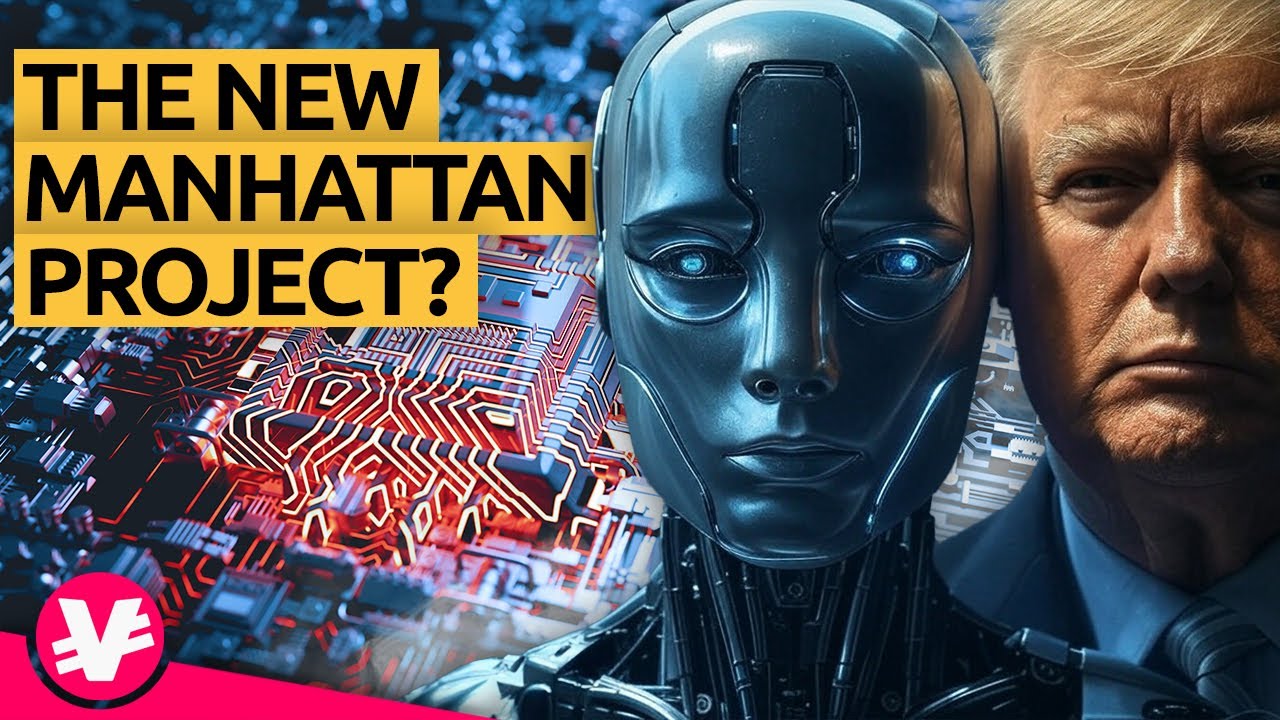
In a dramatic return to the global political stage, former President Donald J. Trump, as the current 47th President of the United States of America, has unveiled his latest initiative, the so-called ‘Stargate Project,’ in a bid to cement the United States’ dominance in artificial intelligence and outpace China’s meteoric rise in the field. The newly announced programme, cloaked in patriotic rhetoric and ambitious targets, is already stirring intense debate over the future of technological competition between the world’s two largest economies.According to preliminary statements from Trump’s team, the Stargate Project will consolidate the efforts of leading American tech conglomerates, defence contractors, and research universities under a centralised framework. The former president, who has long championed American exceptionalism, claims this approach will provide the United States with a decisive advantage, enabling rapid breakthroughs in cutting-edge AI applications ranging from military strategy to commercial innovation.“America must remain the global leader in technology—no ifs, no buts,” Trump declared at a recent press conference. “China has been trying to surpass us in AI, but with this new project, we will make sure the future remains ours.”Details regarding funding and governance remain scarce, but early indications suggest the initiative will rely heavily on public-private partnerships, tax incentives for research and development, and collaboration with high-profile venture capital firms. Skeptics, however, warn that the endeavour could fan the flames of an increasingly militarised AI race, raising ethical concerns about surveillance, automation of warfare, and data privacy. Critics also question whether the initiative can deliver on its lofty promises, especially in the face of existing economic and geopolitical pressures.Yet for its supporters, the Stargate Project serves as a rallying cry for renewed American leadership and an antidote to worries over China’s technological ascendancy. Proponents argue that accelerating AI research is paramount if the United States wishes to preserve not just military supremacy, but also the economic and cultural influence that has typified its global role for decades.Whether this bold project will succeed—or if it will devolve into a symbolic gesture—remains to be seen. What is certain, however, is that the Stargate Project has already reignited debate about how best to safeguard America’s strategic future and maintain the balance of power in the fast-evolving arena of artificial intelligence.

Truth: The end of the ‘Roman Empire’

The fall of the Roman Empire in the fifth century AD has long captivated historians and the public alike. For centuries, scholars have debated the precise causes of the Empire’s decline, offering myriad explanations—ranging from political corruption and economic instability to moral degeneration and barbarian invasions. Yet despite the passage of time and the wealth of research available, there remains no single, universally accepted answer to the question: why did the Roman Empire truly collapse?A central factor often cited is political fragmentation. As the Empire grew too vast to govern effectively from one centre, Emperor Diocletian introduced the Tetrarchy—a system dividing the realm into eastern and western halves. While initially intended to provide administrative efficiency, this division ultimately paved the way for competing centres of power and weakened the unity that had long defined Roman rule. Frequent changes of leadership and civil wars further sapped the state’s coherence, undermining confidence in the imperial regime.Economics played an equally crucial role. Burdened by expensive military campaigns to protect ever-extending frontiers, the Empire resorted to debasing its currency, provoking rampant inflation and eroding public trust. The resulting fiscal strains fuelled social unrest, as high taxes weighed heavily upon small farmers and urban dwellers alike. Coupled with declining trade routes and resource depletion, these pressures contributed to a persistent sense of crisis.Compounding these challenges was the growing threat from beyond Rome’s borders. Germanic tribes such as the Visigoths, Vandals, and Ostrogoths gradually eroded the Western Empire’s defensive capabilities. While earlier Roman armies proved formidable, internal discord had dulled their edge, allowing external forces to breach once-impenetrable frontiers.Modern historians emphasise that the Empire did not fall solely because of barbarian invasions, moral decay, or fiscal collapse; instead, its downfall was the outcome of a confluence of factors, each interacting with the other. The story of Rome’s fall thus serves as a stark reminder that even the mightiest of civilisations can succumb to the inexorable weight of political, economic, and social upheaval.

Malaysia's Strategic Ascent

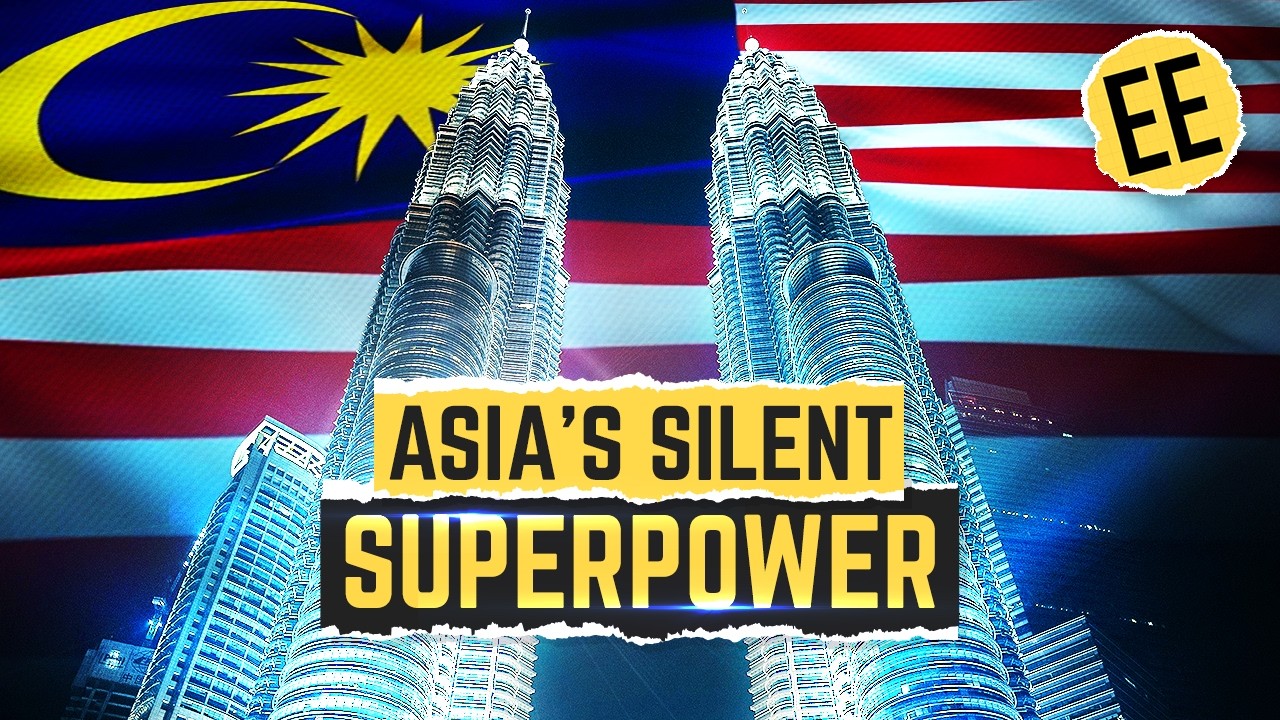
Malaysia has long been a significant player in Southeast Asia, but recent developments have positioned it as one of the most strategic economies in the entire Asian region. Through a combination of robust infrastructure, strategic geographic positioning, proactive government policies, and a diversified economic base, Malaysia is emerging as a pivotal hub for trade, investment, and innovation. Its ability to navigate global challenges while maintaining steady growth underscores its rising influence in Asia’s economic landscape.A Remarkable Economic TransformationSince gaining independence in 1957, Malaysia has undergone a profound economic transformation. Once reliant on agriculture and commodity exports such as rubber and tin, the country has successfully diversified into a manufacturing and service-based economy. Today, Malaysia is a leading exporter of electrical appliances, parts, and components, with its manufacturing sector serving as a cornerstone of economic growth. This shift has elevated Malaysia from a low-income to an upper-middle-income nation within a single generation, a feat that few countries have achieved so rapidly. The country’s gross national income (GNI) per capita has grown impressively over the decades, reflecting sustained economic momentum.Global Trade and ConnectivityA key factor in Malaysia’s rise is its extensive global trade connections. The country engages with 90 percent of the world’s nations, surpassing many of its regional counterparts in trade openness. This has driven employment creation and income growth, with approximately 40 percent of jobs linked to export activities. Malaysia’s strategic development policies, which focus on outward-oriented, labour-intensive growth and investments in human capital, have ensured macroeconomic stability. The government’s emphasis on credible economic governance has also played a crucial role in maintaining investor confidence.Vision for a High-Income FutureIn recent years, Malaysia has set its sights on becoming a high-income, developed nation while ensuring sustainable shared prosperity. The government’s National Investment Aspirations (NIA), adopted in 2021, has been instrumental in reshaping the country’s investment landscape. The NIA prioritises foreign direct investment (FDI) that enhances local research and development (R&D), generates high-income jobs, and integrates Malaysia into global supply chains. This framework has laid the foundation for the New Industrial Master Plan, which aims to further boost Malaysia’s economic complexity and innovation.World-Class InfrastructureMalaysia’s infrastructure is another critical asset. The country boasts one of the most developed infrastructures in Asia, with a telecommunications network second only to Singapore’s in Southeast Asia, supporting millions of fixed-broadband, fixed-line, and cellular subscribers. Its strategic location on the Strait of Malacca, one of the world’s most important shipping lanes, enhances its commercial significance. Malaysia’s highly developed maritime shipping sector has earned it a top global ranking for shipping trade route connectivity.Resilience Amid Global ChallengesThe Malaysian economy has demonstrated remarkable resilience in the face of external challenges. In the fourth quarter of 2024, despite increasing global headwinds, Malaysia’s economy grew by 5.0 percent, driven by strong investment activities, rising exports, and sustained domestic spending. The central bank’s decision to maintain the policy rate at 3 percent reflects confidence in the country’s economic prospects, with inflation expected to remain manageable. Notably, the Malaysian ringgit appreciated by 2.7 percent in 2024, making it one of the few Asian currencies to strengthen during the year.A Forward-Looking EconomyLooking ahead, Malaysia’s growth is expected to be fuelled by robust investment expansion, resilient household spending, and a recovery in exports. The government’s Twelfth Malaysia Plan, which focuses on accelerating economic growth through selective investments and infrastructure development, is set to play a pivotal role in achieving these goals. Government-linked investment vehicles continue to invest in key sectors, further bolstering the economy.Stability and InclusivityMalaysia’s ability to manage inter-ethnic tensions pragmatically has also contributed to its economic stability. Despite occasional challenges, the country has maintained growth momentum, a testament to its inclusive development policies. The government’s focus on sustainable shared prosperity ensures that economic benefits are distributed equitably, fostering social cohesion and long-term stability.ConclusionIn conclusion, Malaysia’s strategic location, advanced infrastructure, diversified economy, and forward-thinking government policies have positioned it as a linchpin in Asia’s economic future. As the country continues to navigate global uncertainties while pursuing its vision of becoming a high-income nation, Malaysia is well on its way to becoming Asia’s most strategic economy.