
El Comercio De La República - Calm or Chaos: Iran’s reach

Lima -

Calm or Chaos: Iran’s reach


Over the past month, Iran’s ballistic missile programme has accelerated from regional nuisance to continental concern. Tehran’s attempt to strike the joint U.S.–British base on Diego Garcia in the Indian Ocean, roughly 4,000 kilometres from Iranian territory, demonstrated a range that could theoretically reach European cities. Although both projectiles failed—one suffered a mid‑flight malfunction and the other was intercepted—the episode thrust the continent into a debate about its readiness and reshaped financial markets. Investors, already jittery over artificial‑intelligence bubbles and trade tensions, watched the war footage and took fright. Redemption requests surged at private‑credit funds, prompting the biggest managers to gate withdrawals and igniting fears of a liquidity crunch.

Europe’s new security question
The Diego Garcia launches mark the first time Iran has tested ballistic missiles beyond 2,000 kilometres. European capitals such as Paris, Berlin and Rome lie within this theoretical reach, and officials admitted privately that air‑defence inventories are thin after years of supplying interceptors to Ukraine. Defence analysts caution that range does not equal capability: targeting, accuracy, survivability and the political willingness to withstand a NATO response all matter. Iran has yet to demonstrate precision at such distances, and any missile would need to cross several NATO members’ airspace. Nevertheless, the spectacle underscored Europe’s reliance on the U.S.-led ballistic missile defence network and highlighted a vulnerability at a time when allied resources are stretched.

Beyond ballistic missiles, experts warn that Tehran could opt for hybrid operations on European soil. Analysts cite cyber‑sabotage against energy networks, healthcare systems, shipping and finance; arson or attacks carried out through criminal proxies; and targeting of Israeli, Jewish, U.S. or Iranian dissident sites. Europe’s civil‑defence preparations, from public alert systems to shelter infrastructure, lag behind those of states accustomed to regular missile fire. Several governments have moved to reinforce maritime patrols in the Strait of Hormuz, a critical artery for oil and liquefied natural gas, but remain wary of escalating the conflict. The debate now centres on whether to bolster defences and accept higher costs or continue with a cautious risk‑management approach.

Voices from the public debate
The emerging conversation has been polarised. Hard‑line commentators argue that tolerating Tehran’s Islamic Revolutionary Guard Corps (IRGC) invites future threats; unless the IRGC is dismantled, they say, it will rebuild its arsenal, restart nuclear enrichment and hold the world hostage. Others question whether escalating rhetoric is justified, noting that the latest missiles failed and that mixing facts with speculative doom scenarios fuels unnecessary panic. One critic called the apocalyptic talk “horribly disturbing,” accusing pundits of using the spectre of a European attack to justify broader agendas. Amid these extremes, many Europeans simply worry that Iran will not stop once the current fighting ends and demand clear strategies rather than slogans.

Panic in the private‑credit market
The geopolitical shock coincided with a run on the $2 trillion global private‑credit industry. These funds, touted as higher‑yielding alternatives to bonds, allow investors to redeem only a small percentage of their holdings each quarter. When redemptions spiked in March, several giants—including funds backed by household names in asset management—capped or suspended withdrawals. One flagship business‑development company limited investors to 5 % of net assets after requests exceeded the quarterly cap. Other managers honoured only half of withdrawal requests as redemption queues reached double‑digit percentages.

Such gating is designed to prevent fire‑sale liquidations of illiquid loans, yet it exposed structural weaknesses in “semi‑liquid” funds marketed to retail investors. Traded business‑development companies, which make up about 20 % of the sector, offer an escape via stock exchanges but have tumbled to discounts near eight per cent below net asset value. Non‑traded vehicles, which hold roughly $270 billion, offer no daily exit and now face redemption queues that could extend into 2027. Analysts warn that if discounts widen to more than 10 %, markets will be pricing systemic credit problems rather than isolated stress.

The private‑credit boom flourished as banks retreated from middle‑market lending. Assets under management grew from about $200 billion in early 2022 to $500 billion by late 2025, spurred by yields approaching ten per cent. The liquidity mismatch became apparent when two software companies with heavy private‑credit backing went bankrupt last autumn. Fears that artificial intelligence could erode subscription‑software revenues spurred investors to withdraw, and some funds had replaced cash reserves with syndicated loans that were also exposed to software debt. A prominent chief executive likened the situation to seeing a cockroach in the kitchen—where one appears, more are likely.

The recent war shock intensified the scramble. Shares of major private‑credit managers have fallen between 20 % and 40 % this year. Some firms responded by selling assets to honour redemptions, while others injected their own capital. Industry leaders argue that withdrawal limits are a feature, not a bug; investors trade liquidity for higher returns. Yet regulators and critics worry about transparency and contagion. Banks have lent an estimated $300 billion to private‑credit firms, and U.S. bank stocks have fallen more than 11 % since January. While few see a 2008‑style collapse, confidence is a fragile commodity. If trust erodes, a liquidity squeeze could reverberate through private‑equity deals, middle‑market companies and, ultimately, the broader economy.

Geopolitics, markets and the road ahead
European stock indices slid after the missile launches as investors priced in war risk alongside AI‑driven volatility. Travel and hospitality stocks fell sharply on fears of airspace closures, while defence and energy companies rallied. Analysts note that the primary transmission channel from the conflict to macro‑economics is through energy prices; a prolonged disruption of the Strait of Hormuz could send oil past $100 per barrel and compress growth. In private credit, managers and investors will watch three metrics closely in coming months: earnings reports from business‑development companies to assess borrowers’ health; disclosure of redemption queues when the next withdrawal window opens in July; and the size of discounts on traded funds.

For Europe, the strategic question remains whether to treat Iran’s longer‑range missiles as a wake‑up call or a deterrent signal. Air‑defence architectures designed a decade ago to counter Iranian threats exist, but inventories of interceptors are limited. The continent’s reluctance to become embroiled in another Middle Eastern war has collided with a recognition that geography no longer guarantees safety. Hybrid threats, cyber‑attacks and proxy violence may prove more immediate than a long‑range missile. Preparing for these contingencies requires investment in resilience, intelligence sharing and civil‑defence education.

The private‑credit panic, meanwhile, underscores the fragility of financial innovations when tested by geopolitical shocks and technological uncertainty. The industry thrived on the assumption that capital would continue to flow in and redemptions would remain modest. In reality, fear is contagious—whether it is fear of Iranian missiles or fear of losing money to AI‑disrupted borrowers. Restoring confidence will require greater transparency, realistic marketing of liquidity features and better risk management. Geopolitics and finance have always been intertwined; the latest crisis reminds investors and policymakers alike that distant conflicts can have very local consequences.


Featured


Stargate project, Trump and the AI war...

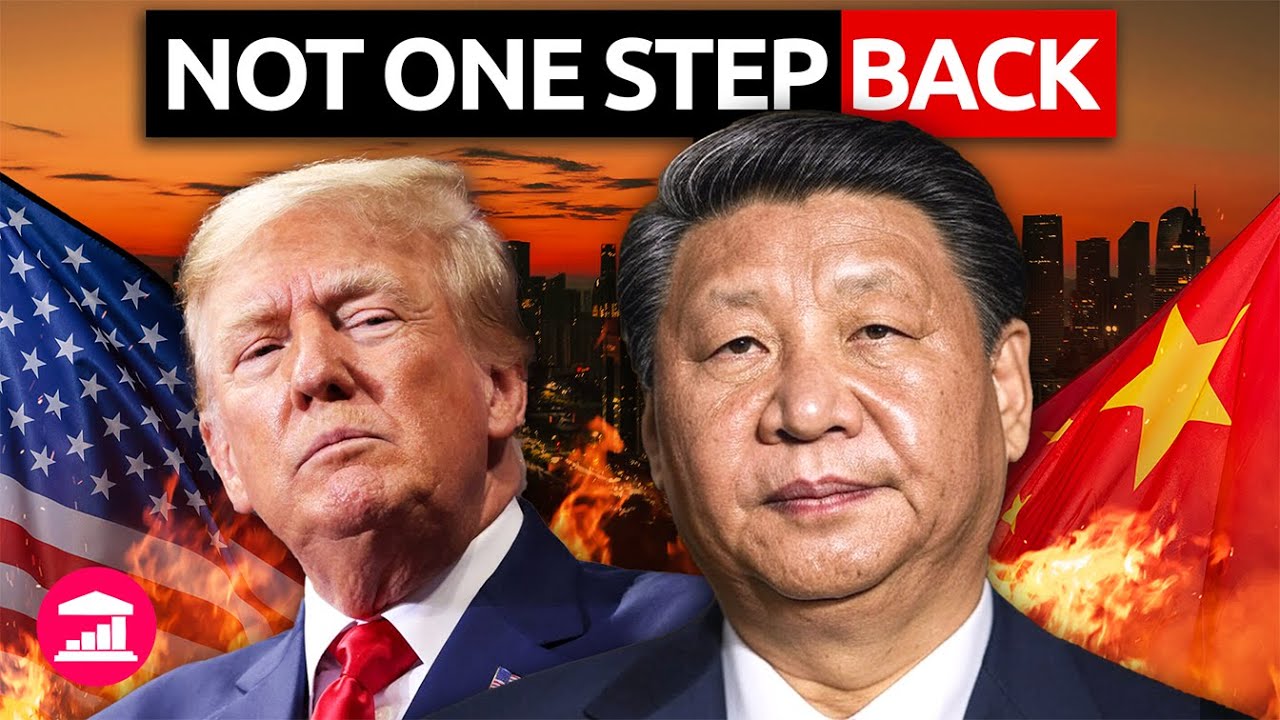
In a dramatic return to the global political stage, former President Donald J. Trump, as the current 47th President of the United States of America, has unveiled his latest initiative, the so-called ‘Stargate Project,’ in a bid to cement the United States’ dominance in artificial intelligence and outpace China’s meteoric rise in the field. The newly announced programme, cloaked in patriotic rhetoric and ambitious targets, is already stirring intense debate over the future of technological competition between the world’s two largest economies.According to preliminary statements from Trump’s team, the Stargate Project will consolidate the efforts of leading American tech conglomerates, defence contractors, and research universities under a centralised framework. The former president, who has long championed American exceptionalism, claims this approach will provide the United States with a decisive advantage, enabling rapid breakthroughs in cutting-edge AI applications ranging from military strategy to commercial innovation.“America must remain the global leader in technology—no ifs, no buts,” Trump declared at a recent press conference. “China has been trying to surpass us in AI, but with this new project, we will make sure the future remains ours.”Details regarding funding and governance remain scarce, but early indications suggest the initiative will rely heavily on public-private partnerships, tax incentives for research and development, and collaboration with high-profile venture capital firms. Skeptics, however, warn that the endeavour could fan the flames of an increasingly militarised AI race, raising ethical concerns about surveillance, automation of warfare, and data privacy. Critics also question whether the initiative can deliver on its lofty promises, especially in the face of existing economic and geopolitical pressures.Yet for its supporters, the Stargate Project serves as a rallying cry for renewed American leadership and an antidote to worries over China’s technological ascendancy. Proponents argue that accelerating AI research is paramount if the United States wishes to preserve not just military supremacy, but also the economic and cultural influence that has typified its global role for decades.Whether this bold project will succeed—or if it will devolve into a symbolic gesture—remains to be seen. What is certain, however, is that the Stargate Project has already reignited debate about how best to safeguard America’s strategic future and maintain the balance of power in the fast-evolving arena of artificial intelligence.

Truth: The end of the ‘Roman Empire’

The fall of the Roman Empire in the fifth century AD has long captivated historians and the public alike. For centuries, scholars have debated the precise causes of the Empire’s decline, offering myriad explanations—ranging from political corruption and economic instability to moral degeneration and barbarian invasions. Yet despite the passage of time and the wealth of research available, there remains no single, universally accepted answer to the question: why did the Roman Empire truly collapse?A central factor often cited is political fragmentation. As the Empire grew too vast to govern effectively from one centre, Emperor Diocletian introduced the Tetrarchy—a system dividing the realm into eastern and western halves. While initially intended to provide administrative efficiency, this division ultimately paved the way for competing centres of power and weakened the unity that had long defined Roman rule. Frequent changes of leadership and civil wars further sapped the state’s coherence, undermining confidence in the imperial regime.Economics played an equally crucial role. Burdened by expensive military campaigns to protect ever-extending frontiers, the Empire resorted to debasing its currency, provoking rampant inflation and eroding public trust. The resulting fiscal strains fuelled social unrest, as high taxes weighed heavily upon small farmers and urban dwellers alike. Coupled with declining trade routes and resource depletion, these pressures contributed to a persistent sense of crisis.Compounding these challenges was the growing threat from beyond Rome’s borders. Germanic tribes such as the Visigoths, Vandals, and Ostrogoths gradually eroded the Western Empire’s defensive capabilities. While earlier Roman armies proved formidable, internal discord had dulled their edge, allowing external forces to breach once-impenetrable frontiers.Modern historians emphasise that the Empire did not fall solely because of barbarian invasions, moral decay, or fiscal collapse; instead, its downfall was the outcome of a confluence of factors, each interacting with the other. The story of Rome’s fall thus serves as a stark reminder that even the mightiest of civilisations can succumb to the inexorable weight of political, economic, and social upheaval.

Malaysia's Strategic Ascent

Malaysia has long been a significant player in Southeast Asia, but recent developments have positioned it as one of the most strategic economies in the entire Asian region. Through a combination of robust infrastructure, strategic geographic positioning, proactive government policies, and a diversified economic base, Malaysia is emerging as a pivotal hub for trade, investment, and innovation. Its ability to navigate global challenges while maintaining steady growth underscores its rising influence in Asia’s economic landscape.A Remarkable Economic TransformationSince gaining independence in 1957, Malaysia has undergone a profound economic transformation. Once reliant on agriculture and commodity exports such as rubber and tin, the country has successfully diversified into a manufacturing and service-based economy. Today, Malaysia is a leading exporter of electrical appliances, parts, and components, with its manufacturing sector serving as a cornerstone of economic growth. This shift has elevated Malaysia from a low-income to an upper-middle-income nation within a single generation, a feat that few countries have achieved so rapidly. The country’s gross national income (GNI) per capita has grown impressively over the decades, reflecting sustained economic momentum.Global Trade and ConnectivityA key factor in Malaysia’s rise is its extensive global trade connections. The country engages with 90 percent of the world’s nations, surpassing many of its regional counterparts in trade openness. This has driven employment creation and income growth, with approximately 40 percent of jobs linked to export activities. Malaysia’s strategic development policies, which focus on outward-oriented, labour-intensive growth and investments in human capital, have ensured macroeconomic stability. The government’s emphasis on credible economic governance has also played a crucial role in maintaining investor confidence.Vision for a High-Income FutureIn recent years, Malaysia has set its sights on becoming a high-income, developed nation while ensuring sustainable shared prosperity. The government’s National Investment Aspirations (NIA), adopted in 2021, has been instrumental in reshaping the country’s investment landscape. The NIA prioritises foreign direct investment (FDI) that enhances local research and development (R&D), generates high-income jobs, and integrates Malaysia into global supply chains. This framework has laid the foundation for the New Industrial Master Plan, which aims to further boost Malaysia’s economic complexity and innovation.World-Class InfrastructureMalaysia’s infrastructure is another critical asset. The country boasts one of the most developed infrastructures in Asia, with a telecommunications network second only to Singapore’s in Southeast Asia, supporting millions of fixed-broadband, fixed-line, and cellular subscribers. Its strategic location on the Strait of Malacca, one of the world’s most important shipping lanes, enhances its commercial significance. Malaysia’s highly developed maritime shipping sector has earned it a top global ranking for shipping trade route connectivity.Resilience Amid Global ChallengesThe Malaysian economy has demonstrated remarkable resilience in the face of external challenges. In the fourth quarter of 2024, despite increasing global headwinds, Malaysia’s economy grew by 5.0 percent, driven by strong investment activities, rising exports, and sustained domestic spending. The central bank’s decision to maintain the policy rate at 3 percent reflects confidence in the country’s economic prospects, with inflation expected to remain manageable. Notably, the Malaysian ringgit appreciated by 2.7 percent in 2024, making it one of the few Asian currencies to strengthen during the year.A Forward-Looking EconomyLooking ahead, Malaysia’s growth is expected to be fuelled by robust investment expansion, resilient household spending, and a recovery in exports. The government’s Twelfth Malaysia Plan, which focuses on accelerating economic growth through selective investments and infrastructure development, is set to play a pivotal role in achieving these goals. Government-linked investment vehicles continue to invest in key sectors, further bolstering the economy.Stability and InclusivityMalaysia’s ability to manage inter-ethnic tensions pragmatically has also contributed to its economic stability. Despite occasional challenges, the country has maintained growth momentum, a testament to its inclusive development policies. The government’s focus on sustainable shared prosperity ensures that economic benefits are distributed equitably, fostering social cohesion and long-term stability.ConclusionIn conclusion, Malaysia’s strategic location, advanced infrastructure, diversified economy, and forward-thinking government policies have positioned it as a linchpin in Asia’s economic future. As the country continues to navigate global uncertainties while pursuing its vision of becoming a high-income nation, Malaysia is well on its way to becoming Asia’s most strategic economy.