El Comercio De La República - Ultimatum Spurs Credit Panic

Lima -

Ultimatum Spurs Credit Panic


Tension between Washington and Tehran reached a new peak when President Donald Trump issued what he described as Iran’s final opportunity to avoid a ground invasion. In a broadcast from the White House he demanded that Tehran reopen the Strait of Hormuz and accept a proposed peace framework, warning that failure to do so would result in US troops seizing strategic positions along the Iranian coast. The ultimatum came against the backdrop of a month‑long conflict triggered by joint US‑Israeli strikes that targeted high‑ranking Revolutionary Guard commanders and nuclear facilities. Iranian retaliation shut down the world’s most important oil chokepoint, turning the crisis into a showdown over energy security.

Mr Trump originally gave Iranian leaders 48 hours to comply. When Tehran responded with missile barrages across the Gulf and threatened to mine the shipping lane, he extended the deadline, telling reporters he had granted a 10‑day pause while back‑channel talks continued. He insisted negotiations were “going very well” and that Washington had already achieved “victory” through air and cyber‑attacks on Iran’s infrastructure. Iranian officials dismissed talk of negotiations as psychological warfare and accused the United States of manipulating markets. Regional mediators such as Pakistan and Egypt acknowledged that messages were being relayed but emphasised that no direct talks had taken place. As the days ticked down, fears grew that the United States might seize Kharg Island, Iran’s main export terminal, triggering regional proxies to target shipping in the Red Sea.

Energy shock and private‑credit turmoil
The standoff has had swift and dramatic economic consequences. With the Strait of Hormuz effectively closed, commercial shipping through the Gulf came to a standstill and oil prices recorded their largest weekly rise on record. West Texas Intermediate crude surged more than a third in a single week while Brent crude climbed by nearly 30 per cent. Analysts warned that an additional four million barrels per day could be taken off the market if the blockade persisted. Rising pump prices squeezed retailers, transport companies and manufacturers, adding to an already fragile economic outlook.

The shock waves were felt most acutely in the $1.5 trillion private‑credit market. These semi‑liquid vehicles, which lend to midsized companies and are marketed to pension funds and wealthy individuals, faced a rush of withdrawal requests as investors sought to raise cash. BlackRock’s $26 billion HPS Corporate Lending Fund reported redemption demands equivalent to 9.3 per cent of its outstanding shares, far exceeding its quarterly repurchase cap. Management limited redemptions to 5 per cent, returning roughly half the cash requested and sending the firm’s share price tumbling. Blue Owl and Blackstone, which run some of the largest non‑traded business development companies, also faced record withdrawals; in one case more than $3.8 billion in shares were tendered, forcing the fund to raise its normal limit and inject capital. Analysts at RA Stanger warned that capital formation for these vehicles could fall by 40 per cent this year, while Deutsche Bank noted that business development companies hold roughly $143 billion of leveraged loans, creating the risk of forced sales across the middle market.

As redemption gates slammed shut, global equity markets swooned. The Cboe Volatility Index, Wall Street’s “fear gauge”, jumped 23 per cent to 26.43, a level last seen during the early days of the Iraq War. Investors rushed into government bonds, gold and shares of defence contractors and oil majors. By contrast, high‑growth technology shares tumbled as higher discount rates and geopolitical risk reduced appetite for long‑dated earnings. Economists warned that the combination of soaring energy prices and weakening employment data could plunge the United States into stagflation: non‑farm payrolls fell for the third time in five months and unemployment ticked higher, while wage growth remained too weak to offset rising fuel costs.

Political manoeuvring and global reaction
Inside the administration, the ultimatum has been presented as a strategic gambit designed to force Iran to the negotiating table. Mr Trump’s advisers, including special envoy Steve Witkoff and son‑in‑law Jared Kushner, have claimed that they are in contact with a “top person” in Tehran, though they refuse to name him. In public, the president boasts of “major points of agreement” and hints that a comprehensive cessation of hostilities is within reach. Privately, diplomats admit that communications are being conducted through intermediaries in Islamabad and Muscat and that progress is slow. Iranian parliamentary speaker Mohammad Baqer Qalibaf dismissed US claims as fake news intended to calm financial markets and insisted that all Iranian officials remain united behind their supreme leader.

European and Asian governments have reacted cautiously. British prime minister Keir Starmer confirmed that London was aware of US‑Iranian back‑channel contacts and urged a swift resolution to the conflict. China and India, heavily dependent on Gulf energy supplies, have called for de‑escalation and begun rerouting tankers via the Cape of Good Hope, adding weeks to delivery times and inflating freight costs. Gulf states have increased war‑risk premiums by hundreds of thousands of dollars per voyage, raising insurance costs for carriers. Central banks in Tokyo and Frankfurt have signalled their readiness to provide liquidity if market stress intensifies, while the US Federal Reserve faces a dilemma: cutting rates might support growth, but doing so could fuel energy‑driven inflation.

Public mood and the road ahead
Public reaction to Mr Trump’s ultimatum has been polarised. Many observers, including some veterans of prior Middle East conflicts, fear that giving Tehran a hard deadline risks sleepwalking into a regional war with unpredictable consequences. They point to historical precedents—such as the invasions of Iraq and Afghanistan—to argue that ground operations rarely achieve their political aims and often ignite insurgencies. Environmentalists warn that fighting near Iran’s oil infrastructure could trigger a spill in the Persian Gulf, creating a global ecological disaster.

Others believe the ultimatum is a calculated negotiating tactic designed to shock Iran into accepting a diplomatic settlement. Supporters of the White House’s approach argue that the unprecedented sanctions and targeted strikes have left Tehran militarily weakened and politically isolated, leaving it little choice but to sue for peace. Some investors are taking the long view, betting that a temporary energy price spike will be followed by a rapid stabilisation once a deal is struck and the Strait of Hormuz reopens. Experienced traders caution against panic selling, noting that private‑market assets are marked quarterly and that sudden shifts in valuation can create opportunities for those with patient capital.

Whatever the outcome, the episode underscores the tight link between geopolitics and finance. A threat of invasion issued in Washington can trigger redemption runs in New York, factory shutdowns in Berlin and shipping chaos in the Gulf. With the deadline looming and both sides trading missiles and accusations, the world is braced for either a fragile peace or another violent escalation. For now, businesses and investors can do little more than monitor events, hedge their exposures and hope that diplomacy prevails.



Featured


Stargate project, Trump and the AI war...

In a dramatic return to the global political stage, former President Donald J. Trump, as the current 47th President of the United States of America, has unveiled his latest initiative, the so-called ‘Stargate Project,’ in a bid to cement the United States’ dominance in artificial intelligence and outpace China’s meteoric rise in the field. The newly announced programme, cloaked in patriotic rhetoric and ambitious targets, is already stirring intense debate over the future of technological competition between the world’s two largest economies.According to preliminary statements from Trump’s team, the Stargate Project will consolidate the efforts of leading American tech conglomerates, defence contractors, and research universities under a centralised framework. The former president, who has long championed American exceptionalism, claims this approach will provide the United States with a decisive advantage, enabling rapid breakthroughs in cutting-edge AI applications ranging from military strategy to commercial innovation.“America must remain the global leader in technology—no ifs, no buts,” Trump declared at a recent press conference. “China has been trying to surpass us in AI, but with this new project, we will make sure the future remains ours.”Details regarding funding and governance remain scarce, but early indications suggest the initiative will rely heavily on public-private partnerships, tax incentives for research and development, and collaboration with high-profile venture capital firms. Skeptics, however, warn that the endeavour could fan the flames of an increasingly militarised AI race, raising ethical concerns about surveillance, automation of warfare, and data privacy. Critics also question whether the initiative can deliver on its lofty promises, especially in the face of existing economic and geopolitical pressures.Yet for its supporters, the Stargate Project serves as a rallying cry for renewed American leadership and an antidote to worries over China’s technological ascendancy. Proponents argue that accelerating AI research is paramount if the United States wishes to preserve not just military supremacy, but also the economic and cultural influence that has typified its global role for decades.Whether this bold project will succeed—or if it will devolve into a symbolic gesture—remains to be seen. What is certain, however, is that the Stargate Project has already reignited debate about how best to safeguard America’s strategic future and maintain the balance of power in the fast-evolving arena of artificial intelligence.

Truth: The end of the ‘Roman Empire’

The fall of the Roman Empire in the fifth century AD has long captivated historians and the public alike. For centuries, scholars have debated the precise causes of the Empire’s decline, offering myriad explanations—ranging from political corruption and economic instability to moral degeneration and barbarian invasions. Yet despite the passage of time and the wealth of research available, there remains no single, universally accepted answer to the question: why did the Roman Empire truly collapse?A central factor often cited is political fragmentation. As the Empire grew too vast to govern effectively from one centre, Emperor Diocletian introduced the Tetrarchy—a system dividing the realm into eastern and western halves. While initially intended to provide administrative efficiency, this division ultimately paved the way for competing centres of power and weakened the unity that had long defined Roman rule. Frequent changes of leadership and civil wars further sapped the state’s coherence, undermining confidence in the imperial regime.Economics played an equally crucial role. Burdened by expensive military campaigns to protect ever-extending frontiers, the Empire resorted to debasing its currency, provoking rampant inflation and eroding public trust. The resulting fiscal strains fuelled social unrest, as high taxes weighed heavily upon small farmers and urban dwellers alike. Coupled with declining trade routes and resource depletion, these pressures contributed to a persistent sense of crisis.Compounding these challenges was the growing threat from beyond Rome’s borders. Germanic tribes such as the Visigoths, Vandals, and Ostrogoths gradually eroded the Western Empire’s defensive capabilities. While earlier Roman armies proved formidable, internal discord had dulled their edge, allowing external forces to breach once-impenetrable frontiers.Modern historians emphasise that the Empire did not fall solely because of barbarian invasions, moral decay, or fiscal collapse; instead, its downfall was the outcome of a confluence of factors, each interacting with the other. The story of Rome’s fall thus serves as a stark reminder that even the mightiest of civilisations can succumb to the inexorable weight of political, economic, and social upheaval.

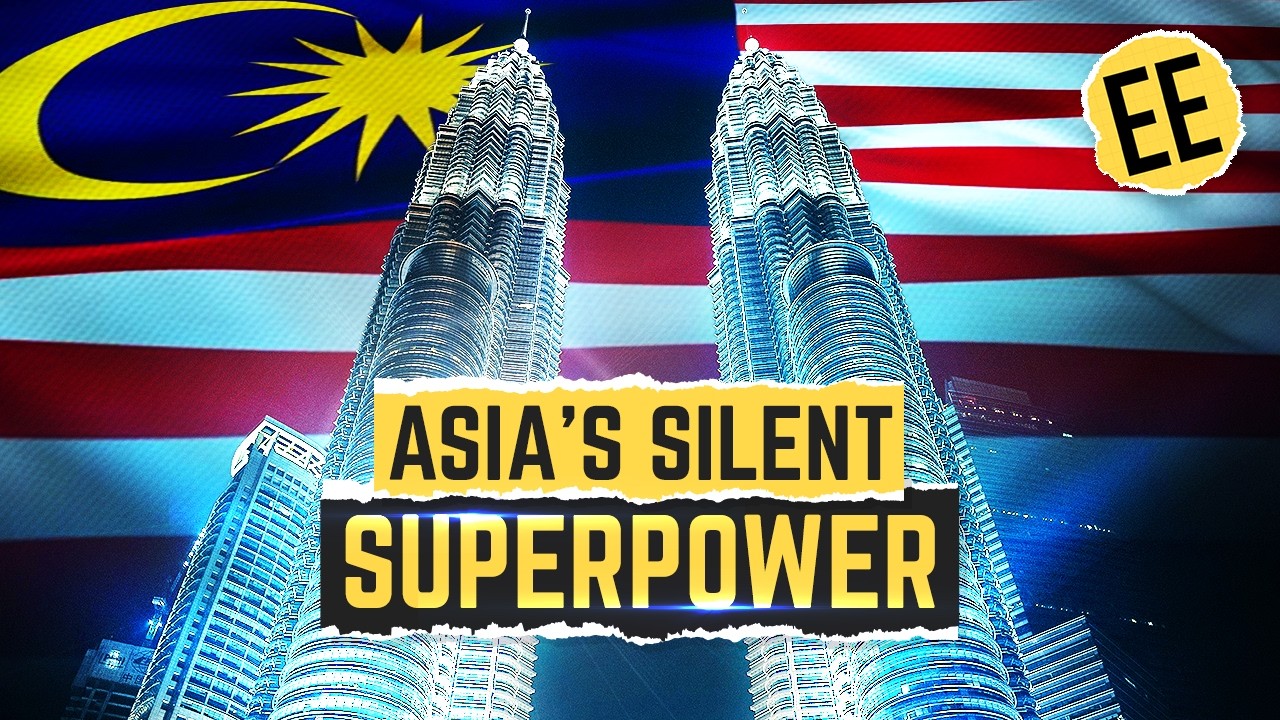
Malaysia's Strategic Ascent

Malaysia has long been a significant player in Southeast Asia, but recent developments have positioned it as one of the most strategic economies in the entire Asian region. Through a combination of robust infrastructure, strategic geographic positioning, proactive government policies, and a diversified economic base, Malaysia is emerging as a pivotal hub for trade, investment, and innovation. Its ability to navigate global challenges while maintaining steady growth underscores its rising influence in Asia’s economic landscape.A Remarkable Economic TransformationSince gaining independence in 1957, Malaysia has undergone a profound economic transformation. Once reliant on agriculture and commodity exports such as rubber and tin, the country has successfully diversified into a manufacturing and service-based economy. Today, Malaysia is a leading exporter of electrical appliances, parts, and components, with its manufacturing sector serving as a cornerstone of economic growth. This shift has elevated Malaysia from a low-income to an upper-middle-income nation within a single generation, a feat that few countries have achieved so rapidly. The country’s gross national income (GNI) per capita has grown impressively over the decades, reflecting sustained economic momentum.Global Trade and ConnectivityA key factor in Malaysia’s rise is its extensive global trade connections. The country engages with 90 percent of the world’s nations, surpassing many of its regional counterparts in trade openness. This has driven employment creation and income growth, with approximately 40 percent of jobs linked to export activities. Malaysia’s strategic development policies, which focus on outward-oriented, labour-intensive growth and investments in human capital, have ensured macroeconomic stability. The government’s emphasis on credible economic governance has also played a crucial role in maintaining investor confidence.Vision for a High-Income FutureIn recent years, Malaysia has set its sights on becoming a high-income, developed nation while ensuring sustainable shared prosperity. The government’s National Investment Aspirations (NIA), adopted in 2021, has been instrumental in reshaping the country’s investment landscape. The NIA prioritises foreign direct investment (FDI) that enhances local research and development (R&D), generates high-income jobs, and integrates Malaysia into global supply chains. This framework has laid the foundation for the New Industrial Master Plan, which aims to further boost Malaysia’s economic complexity and innovation.World-Class InfrastructureMalaysia’s infrastructure is another critical asset. The country boasts one of the most developed infrastructures in Asia, with a telecommunications network second only to Singapore’s in Southeast Asia, supporting millions of fixed-broadband, fixed-line, and cellular subscribers. Its strategic location on the Strait of Malacca, one of the world’s most important shipping lanes, enhances its commercial significance. Malaysia’s highly developed maritime shipping sector has earned it a top global ranking for shipping trade route connectivity.Resilience Amid Global ChallengesThe Malaysian economy has demonstrated remarkable resilience in the face of external challenges. In the fourth quarter of 2024, despite increasing global headwinds, Malaysia’s economy grew by 5.0 percent, driven by strong investment activities, rising exports, and sustained domestic spending. The central bank’s decision to maintain the policy rate at 3 percent reflects confidence in the country’s economic prospects, with inflation expected to remain manageable. Notably, the Malaysian ringgit appreciated by 2.7 percent in 2024, making it one of the few Asian currencies to strengthen during the year.A Forward-Looking EconomyLooking ahead, Malaysia’s growth is expected to be fuelled by robust investment expansion, resilient household spending, and a recovery in exports. The government’s Twelfth Malaysia Plan, which focuses on accelerating economic growth through selective investments and infrastructure development, is set to play a pivotal role in achieving these goals. Government-linked investment vehicles continue to invest in key sectors, further bolstering the economy.Stability and InclusivityMalaysia’s ability to manage inter-ethnic tensions pragmatically has also contributed to its economic stability. Despite occasional challenges, the country has maintained growth momentum, a testament to its inclusive development policies. The government’s focus on sustainable shared prosperity ensures that economic benefits are distributed equitably, fostering social cohesion and long-term stability.ConclusionIn conclusion, Malaysia’s strategic location, advanced infrastructure, diversified economy, and forward-thinking government policies have positioned it as a linchpin in Asia’s economic future. As the country continues to navigate global uncertainties while pursuing its vision of becoming a high-income nation, Malaysia is well on its way to becoming Asia’s most strategic economy.