

El Comercio De La República - Will US Forces Invade Iran?

Lima -

Will US Forces Invade Iran?


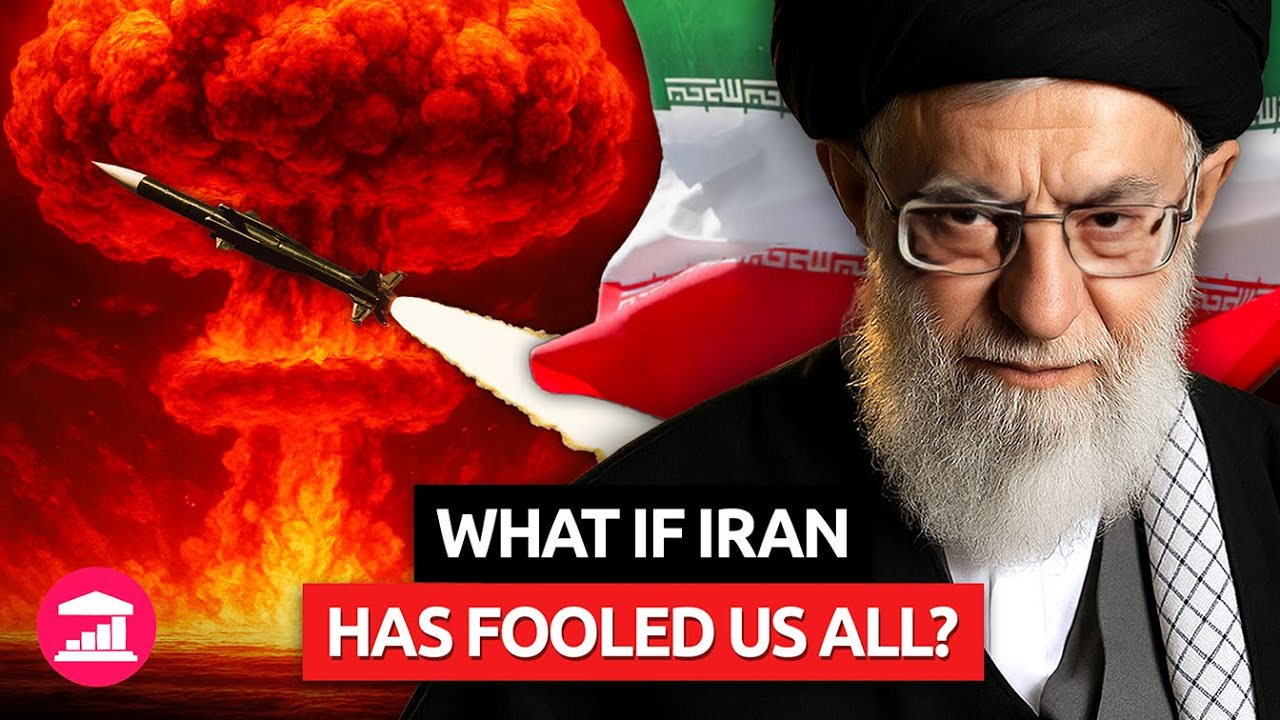
When the United States and Israel launched Operation Epic Fury on 28 February 2026, President Donald Trump said the campaign would be decisive. In speeches since then he has repeated four core objectives: destroy Iran’s ballistic missiles and the factories that build them; annihilate the Iranian navy; sever Tehran’s support for proxy militias; and ensure the Islamic Republic never acquires a nuclear weapon. Officials insist the mission is on course and that Iran’s navy and air force have been “eliminated,” with more than 12,000 Iranian targets struck and more than 155 vessels destroyed. The White House has described the war as a short, focused campaign.

Military records and independent reporting show a more complicated picture. Before the war Iran possessed an estimated 2,500 ballistic missiles. Although U.S. and Israeli strikes have degraded production lines and reduced Iran’s launch rate by about 90 %, intelligence sources say only about one‑third of the arsenal has been destroyed and that Tehran retains a modest capacity to hit Israel and the Gulf. The bombing has extended beyond military targets; Iranian officials say strikes have hit pharmaceutical plants, desalination facilities and other industrial sites, while the Iranian Red Crescent reports hundreds of civilian casualties. More than 2,000 Iranians have been killed, according to Al Jazeera, and U.S. Central Command acknowledges that thirteen American service members have died. Israel’s simultaneous campaign in Lebanon has displaced 1.2 million people, and Gaza’s humanitarian relief has been halted after Israel closed the Rafah crossing.

Shifting goals and international unease
The justifications for Operation Epic Fury have expanded. Trump’s initial pledge to aid Iranian protesters was followed by calls for regime change, then by claims of pre‑empting an imminent Iranian attack and of avenging alleged plots against the president. As the war unfolded, officials such as Secretary of State Marco Rubio and Secretary of War Pete Hegseth insisted the mission was narrowly focused on missile and naval destruction. Analysts note that the rhetoric has evolved to fit battlefield developments, creating confusion about the operation’s true purpose. Critics, including international legal scholars, argue that the campaign risks undermining the UN Charter and could normalise unilateral war. The UN High Commissioner for Human Rights has warned that the conflict’s spread “like wildfire” demands urgent de‑escalation.

Allies are divided. Israel and several Gulf states have provided logistical support, but Spain, France and Italy have restricted U.S. access to airspace and bases. Britain is hosting talks on reopening the Strait of Hormuz, while China and Pakistan have proposed a ceasefire plan. Meanwhile, Iran’s regional partners continue to launch rockets and drones at Israel and U.S. facilities, and Iranian officials say they have “zero trust” in Washington. The prolonged closure of the Strait has pushed global oil prices higher and caused what some economists describe as the worst trade rupture in eighty years. Australia’s prime minister warned his citizens to prepare for months of economic turbulence.

Ground operations: speculation and reality
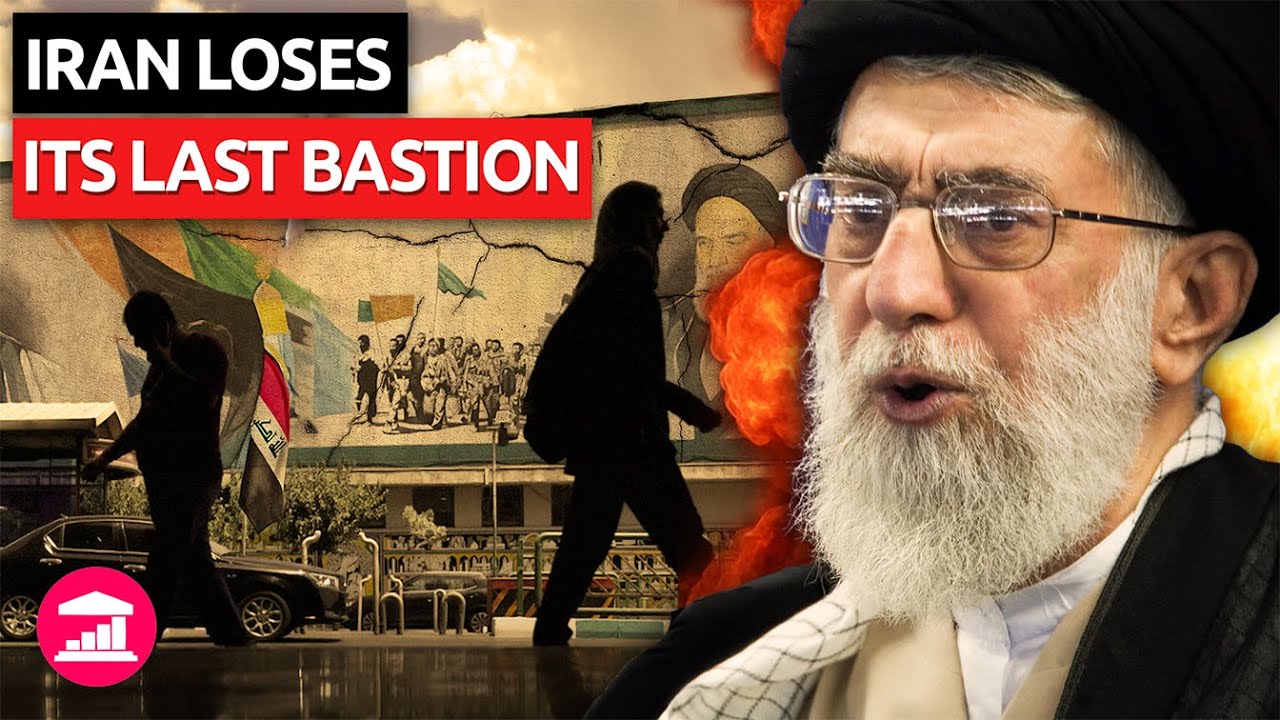
Talk of an imminent U.S. invasion of Iran has intensified after the Pentagon disclosed preparations for limited ground operations. According to officials, plans under consideration involve raids by special operations forces and Marines on Kharg Island and coastal areas near the Strait of Hormuz. Additional forces from the 82nd Airborne Division and a Marine Expeditionary Unit have already arrived in the region. White House press secretary Karoline Leavitt stressed that preparing options does not mean a final decision has been made. Supporters argue that seizing small pieces of terrain could help reopen the waterway and destroy remaining missile batteries; critics counter that such raids would expose U.S. troops to drones, mines and a determined Iranian defence.

Military scholars caution that history offers little comfort for a land war in Iran. Iran is a vast country with rugged terrain and a large standing army and Revolutionary Guard corps. Control of the 200‑kilometre‑long Strait requires keeping the entire waterway open, while Iran only has to close a single chokepoint. Limited raids might not compel Tehran to surrender; they could instead harden Iranian resolve, invite Russian assistance and produce U.S. casualties that erode domestic support. Retired officers note that the last major amphibious operation conducted by U.S. forces was the Incheon landing in the Korean War, underscoring the logistical difficulty of large‑scale landings in hostile territory—a point echoed by commenters online.

Voices from the public sphere
Public reactions reveal both anxiety and bravado. Some commenters salute the “fire, boom” rhetoric Trump used to describe air strikes, while others lampoon it as reckless and unbecoming of a head of state. Many question the wisdom of seeking “undisputed victory” in a country as large and resilient as Iran, warning that prolonged fighting will leave the rest of the world to “suffer for no good reason.” References to historic amphibious operations hint at scepticism about a ground invasion’s feasibility, and several contributors object to the war proceeding without congressional approval. Others voice fear that seizing Iranian oil facilities would be seen globally as plunder. There are, however, voices that praise the campaign and suggest that critics are simply “haters.” Taken together, the comments reflect a divided public grappling with the tension between perceived national security imperatives and the moral, legal and economic costs of war.

An uncertain path forward
Despite confident pronouncements from Washington, the path to a decisive end appears uncertain. Iran’s ability to launch drones and missiles has been dented but not destroyed; its proxies remain active across the Middle East; and the Strait of Hormuz—a lifeline for global commerce—remains contested. The domestic mood in the United States is mixed, and international support is fragmenting. Limited ground raids could deliver symbolic victories but risk entangling U.S. forces in exactly the kind of drawn‑out conflict Trump vowed to avoid. As diplomats convene and militaries mobilise, the world watches to see whether the current campaign marks the prelude to a broader invasion or the crest of an offensive that will soon wind down.


Featured


Stargate project, Trump and the AI war...

In a dramatic return to the global political stage, former President Donald J. Trump, as the current 47th President of the United States of America, has unveiled his latest initiative, the so-called ‘Stargate Project,’ in a bid to cement the United States’ dominance in artificial intelligence and outpace China’s meteoric rise in the field. The newly announced programme, cloaked in patriotic rhetoric and ambitious targets, is already stirring intense debate over the future of technological competition between the world’s two largest economies.According to preliminary statements from Trump’s team, the Stargate Project will consolidate the efforts of leading American tech conglomerates, defence contractors, and research universities under a centralised framework. The former president, who has long championed American exceptionalism, claims this approach will provide the United States with a decisive advantage, enabling rapid breakthroughs in cutting-edge AI applications ranging from military strategy to commercial innovation.“America must remain the global leader in technology—no ifs, no buts,” Trump declared at a recent press conference. “China has been trying to surpass us in AI, but with this new project, we will make sure the future remains ours.”Details regarding funding and governance remain scarce, but early indications suggest the initiative will rely heavily on public-private partnerships, tax incentives for research and development, and collaboration with high-profile venture capital firms. Skeptics, however, warn that the endeavour could fan the flames of an increasingly militarised AI race, raising ethical concerns about surveillance, automation of warfare, and data privacy. Critics also question whether the initiative can deliver on its lofty promises, especially in the face of existing economic and geopolitical pressures.Yet for its supporters, the Stargate Project serves as a rallying cry for renewed American leadership and an antidote to worries over China’s technological ascendancy. Proponents argue that accelerating AI research is paramount if the United States wishes to preserve not just military supremacy, but also the economic and cultural influence that has typified its global role for decades.Whether this bold project will succeed—or if it will devolve into a symbolic gesture—remains to be seen. What is certain, however, is that the Stargate Project has already reignited debate about how best to safeguard America’s strategic future and maintain the balance of power in the fast-evolving arena of artificial intelligence.

Truth: The end of the ‘Roman Empire’

The fall of the Roman Empire in the fifth century AD has long captivated historians and the public alike. For centuries, scholars have debated the precise causes of the Empire’s decline, offering myriad explanations—ranging from political corruption and economic instability to moral degeneration and barbarian invasions. Yet despite the passage of time and the wealth of research available, there remains no single, universally accepted answer to the question: why did the Roman Empire truly collapse?A central factor often cited is political fragmentation. As the Empire grew too vast to govern effectively from one centre, Emperor Diocletian introduced the Tetrarchy—a system dividing the realm into eastern and western halves. While initially intended to provide administrative efficiency, this division ultimately paved the way for competing centres of power and weakened the unity that had long defined Roman rule. Frequent changes of leadership and civil wars further sapped the state’s coherence, undermining confidence in the imperial regime.Economics played an equally crucial role. Burdened by expensive military campaigns to protect ever-extending frontiers, the Empire resorted to debasing its currency, provoking rampant inflation and eroding public trust. The resulting fiscal strains fuelled social unrest, as high taxes weighed heavily upon small farmers and urban dwellers alike. Coupled with declining trade routes and resource depletion, these pressures contributed to a persistent sense of crisis.Compounding these challenges was the growing threat from beyond Rome’s borders. Germanic tribes such as the Visigoths, Vandals, and Ostrogoths gradually eroded the Western Empire’s defensive capabilities. While earlier Roman armies proved formidable, internal discord had dulled their edge, allowing external forces to breach once-impenetrable frontiers.Modern historians emphasise that the Empire did not fall solely because of barbarian invasions, moral decay, or fiscal collapse; instead, its downfall was the outcome of a confluence of factors, each interacting with the other. The story of Rome’s fall thus serves as a stark reminder that even the mightiest of civilisations can succumb to the inexorable weight of political, economic, and social upheaval.

Malaysia's Strategic Ascent

Malaysia has long been a significant player in Southeast Asia, but recent developments have positioned it as one of the most strategic economies in the entire Asian region. Through a combination of robust infrastructure, strategic geographic positioning, proactive government policies, and a diversified economic base, Malaysia is emerging as a pivotal hub for trade, investment, and innovation. Its ability to navigate global challenges while maintaining steady growth underscores its rising influence in Asia’s economic landscape.A Remarkable Economic TransformationSince gaining independence in 1957, Malaysia has undergone a profound economic transformation. Once reliant on agriculture and commodity exports such as rubber and tin, the country has successfully diversified into a manufacturing and service-based economy. Today, Malaysia is a leading exporter of electrical appliances, parts, and components, with its manufacturing sector serving as a cornerstone of economic growth. This shift has elevated Malaysia from a low-income to an upper-middle-income nation within a single generation, a feat that few countries have achieved so rapidly. The country’s gross national income (GNI) per capita has grown impressively over the decades, reflecting sustained economic momentum.Global Trade and ConnectivityA key factor in Malaysia’s rise is its extensive global trade connections. The country engages with 90 percent of the world’s nations, surpassing many of its regional counterparts in trade openness. This has driven employment creation and income growth, with approximately 40 percent of jobs linked to export activities. Malaysia’s strategic development policies, which focus on outward-oriented, labour-intensive growth and investments in human capital, have ensured macroeconomic stability. The government’s emphasis on credible economic governance has also played a crucial role in maintaining investor confidence.Vision for a High-Income FutureIn recent years, Malaysia has set its sights on becoming a high-income, developed nation while ensuring sustainable shared prosperity. The government’s National Investment Aspirations (NIA), adopted in 2021, has been instrumental in reshaping the country’s investment landscape. The NIA prioritises foreign direct investment (FDI) that enhances local research and development (R&D), generates high-income jobs, and integrates Malaysia into global supply chains. This framework has laid the foundation for the New Industrial Master Plan, which aims to further boost Malaysia’s economic complexity and innovation.World-Class InfrastructureMalaysia’s infrastructure is another critical asset. The country boasts one of the most developed infrastructures in Asia, with a telecommunications network second only to Singapore’s in Southeast Asia, supporting millions of fixed-broadband, fixed-line, and cellular subscribers. Its strategic location on the Strait of Malacca, one of the world’s most important shipping lanes, enhances its commercial significance. Malaysia’s highly developed maritime shipping sector has earned it a top global ranking for shipping trade route connectivity.Resilience Amid Global ChallengesThe Malaysian economy has demonstrated remarkable resilience in the face of external challenges. In the fourth quarter of 2024, despite increasing global headwinds, Malaysia’s economy grew by 5.0 percent, driven by strong investment activities, rising exports, and sustained domestic spending. The central bank’s decision to maintain the policy rate at 3 percent reflects confidence in the country’s economic prospects, with inflation expected to remain manageable. Notably, the Malaysian ringgit appreciated by 2.7 percent in 2024, making it one of the few Asian currencies to strengthen during the year.A Forward-Looking EconomyLooking ahead, Malaysia’s growth is expected to be fuelled by robust investment expansion, resilient household spending, and a recovery in exports. The government’s Twelfth Malaysia Plan, which focuses on accelerating economic growth through selective investments and infrastructure development, is set to play a pivotal role in achieving these goals. Government-linked investment vehicles continue to invest in key sectors, further bolstering the economy.Stability and InclusivityMalaysia’s ability to manage inter-ethnic tensions pragmatically has also contributed to its economic stability. Despite occasional challenges, the country has maintained growth momentum, a testament to its inclusive development policies. The government’s focus on sustainable shared prosperity ensures that economic benefits are distributed equitably, fostering social cohesion and long-term stability.ConclusionIn conclusion, Malaysia’s strategic location, advanced infrastructure, diversified economy, and forward-thinking government policies have positioned it as a linchpin in Asia’s economic future. As the country continues to navigate global uncertainties while pursuing its vision of becoming a high-income nation, Malaysia is well on its way to becoming Asia’s most strategic economy.