
El Comercio De La República - Beijing's new Taiwan playbook

Lima -

Beijing's new Taiwan playbook


Beijing's military machinery and political ambitions have moved it closer to a point where it could attempt to seize Taiwan by force.  Decades of double‑digit defence spending have yielded advanced amphibious assault vessels, fleets of hypersonic and ballistic missiles and an air force that can saturate airspace around the island.  Naval analysts note that the People’s Liberation Army Navy’s new Type 054B guided‑missile frigates incorporate artificial‑intelligence‑enabled sensors to improve anti‑submarine warfare and fleet air defence and can undertake long‑range escort missions.  Dozens of civilian‑flagged research vessels, operating under the cover of scientific exploration, have spent years mapping the seabed across the western Pacific and as far afield as Guam and Hawaii to improve Chinese submarine navigation and to erode the United States’ traditional advantage in undersea warfare.  Expanded missile launch infrastructure in Xinjiang, featuring scores of launch pads, is intended to increase the survivability of China’s land‑based nuclear forces.

Yet despite these capabilities, Beijing has shown little appetite for a near‑term invasion.  A recent threat assessment by the United States’ intelligence community concluded that Chinese leaders do not currently plan to execute an invasion by 2027 and lack a fixed timetable for unification.  Taiwan’s defence ministry concurs that China’s build‑up is relentless but emphasises that deterrence, rather than assumptions about invasion windows, will shape Beijing’s calculations.  Analysts argue that a war would trigger unprecedented economic costs.  Taiwan’s semiconductor industry underpins global technology supply chains and about a fifth of world trade transits the Taiwan Strait.  Any conflict that closed this artery would reverberate through financial markets, manufacturing and energy supplies.  Even without U.S. intervention, Chinese leadership would risk social stability at home if a miscalculated assault stalled or provoked severe sanctions.

Against this backdrop, Beijing has refined what some analysts describe as a grey‑zone strategy — a web of coercive measures designed to wear down Taiwan’s morale and manoeuvre it towards “reunification” without firing a shot.  People’s Liberation Army aircraft entered Taiwan’s air defence identification zone more than three hundred times a month after William Lai’s 2024 election, only for the number of incursions to fall sharply in 2026 as planners redistributed sorties to training and maintenance.  China’s coast guard now conducts routine multi‑ship patrols in the restricted waters around Kinmen and Pratas, two Taiwanese‑administered archipelagos close to the mainland, to normalise jurisdictional claims and erode Taiwan’s threat awareness.  As part of the large‑scale “Strait Thunder 2025A” and “Justice Mission 2025” exercises, the People’s Liberation Army practised cutting power and blockading Taiwan’s liquefied natural gas terminals — a rehearsal for imposing energy strangulation during a future crisis.

Energy insecurity is a key prong of Beijing’s hybrid approach.  Taiwan imports around 97 percent of its energy, with liquefied natural gas accounting for roughly half of electricity generation.  When war in Iran temporarily choked off shipments through the Strait of Hormuz earlier this year, Chinese‑language social media channels flooded TikTok and Xiaohongshu with ominous videos claiming Taiwan’s gas reserves would expire within a fortnight and extolling “peaceful unification” as the only remedy.  Officials from the Taiwan Affairs Office even offered to supply electricity and gas from the mainland as soon as Taiwan surrendered its sovereignty.  Taiwan’s government countered by publicising the diversification of its imports, increasing strategic reserves and conducting joint navy‑coast‑guard drills to escort fuel tankers through potential blockades.  Such moves aim to reassure citizens and blunt the psychological impact of Beijing’s energy narratives.

Political infiltration forms another component of the grey‑zone campaign.  Beijing has long supported parties in Taiwan that advocate a looser relationship with the mainland, but recent cases show a willingness to back actors whose public stance on unification is ambiguous.  Taiwanese courts convicted a former spokesperson for the Taiwan People’s Party (TPP) after she accepted funds from Chinese handlers and provided contact lists of government agencies.  Investigators say the case is not isolated: election interference and covert recruitment have targeted both the centrist TPP and elements of the governing Democratic Progressive Party (DPP).  At the international level, Chinese diplomats persuade or pressure host governments to label Taiwan as a province of China; Taiwan stayed away from this year’s World Trade Organization ministerial in Yaoundé after delegates were issued documents bearing that designation.

This cognitive warfare extends to culture and education.  President William Lai has warned that video‑sharing platforms may be used to cultivate the notion that Taiwanese and mainland Chinese people are “one family” and to foster resignation towards annexation.  His administration has banned certain Chinese apps from public‑sector devices and proposed curriculum changes to strengthen civic identity and debunk disinformation.  Opinion polls still show a solid majority of Taiwanese identifying as Taiwanese rather than Chinese, suggesting that Beijing’s narrative campaigns have yet to shift the island’s self‑perception.

While China deploys these non‑military tools, Taiwan is struggling to adapt its defence posture.  The DPP has proposed a special budget worth around US$40 billion to procure hundreds of thousands of unmanned systems, develop an integrated air and missile defence network and fund the domestic arms industry.  Opposition parties controlling the legislature have delayed the budget, preferring a smaller package focused on conventional platforms such as artillery and anti‑tank missiles.  Delays threaten to slow deliveries of High Mobility Artillery Rocket Systems, self‑propelled howitzers and anti‑tank weapons from the United States.  At the same time, Taipei is investing in its first domestically built submarine and plans to upgrade two Dutch‑built boats from the 1980s.  Such measures are meant to raise the cost of aggression and complicate any blockade.

Elsewhere in the region, countries are recalibrating their own strategies in anticipation of cross‑strait tensions.  Japan has acquired Tomahawk cruise missiles from the United States and is modifying its destroyers to carry them, signalling a shift towards a counter‑strike doctrine that can threaten missile launch platforms on the Chinese coast.  The Philippines and Japan have agreed to step up military intelligence sharing and have begun negotiating a boundary in their overlapping exclusive economic zones east of Taiwan.  Manila is seeking Japanese anti‑submarine destroyers and anti‑ship missiles to bolster its navy.  Such cooperation, alongside the United States’ continued security commitments under the Taiwan Relations Act, suggests that any attempt by Beijing to seal off the island would face a more coordinated regional response.

Seen together, these developments reveal why Beijing may perceive hybrid coercion as “something better” than a risky assault.  China’s ability to project force across the Taiwan Strait has improved markedly, but its leaders recognise that a failed invasion would jeopardise economic growth and political legitimacy.  By combining military modernisation with psychological operations, energy leverage, political interference and calibrated maritime pressure, Beijing hopes to corrode Taiwan’s will and convince its citizens that unification is inevitable.  Whether this strategy succeeds will depend on Taiwan’s resilience, the cohesion of its democratic institutions and the willingness of regional partners to deter aggression.  For now, the contest remains a test not of who can fire the first shot, but of whose vision for the island’s future will ultimately prevail.



Featured


Stargate project, Trump and the AI war...

In a dramatic return to the global political stage, former President Donald J. Trump, as the current 47th President of the United States of America, has unveiled his latest initiative, the so-called ‘Stargate Project,’ in a bid to cement the United States’ dominance in artificial intelligence and outpace China’s meteoric rise in the field. The newly announced programme, cloaked in patriotic rhetoric and ambitious targets, is already stirring intense debate over the future of technological competition between the world’s two largest economies.According to preliminary statements from Trump’s team, the Stargate Project will consolidate the efforts of leading American tech conglomerates, defence contractors, and research universities under a centralised framework. The former president, who has long championed American exceptionalism, claims this approach will provide the United States with a decisive advantage, enabling rapid breakthroughs in cutting-edge AI applications ranging from military strategy to commercial innovation.“America must remain the global leader in technology—no ifs, no buts,” Trump declared at a recent press conference. “China has been trying to surpass us in AI, but with this new project, we will make sure the future remains ours.”Details regarding funding and governance remain scarce, but early indications suggest the initiative will rely heavily on public-private partnerships, tax incentives for research and development, and collaboration with high-profile venture capital firms. Skeptics, however, warn that the endeavour could fan the flames of an increasingly militarised AI race, raising ethical concerns about surveillance, automation of warfare, and data privacy. Critics also question whether the initiative can deliver on its lofty promises, especially in the face of existing economic and geopolitical pressures.Yet for its supporters, the Stargate Project serves as a rallying cry for renewed American leadership and an antidote to worries over China’s technological ascendancy. Proponents argue that accelerating AI research is paramount if the United States wishes to preserve not just military supremacy, but also the economic and cultural influence that has typified its global role for decades.Whether this bold project will succeed—or if it will devolve into a symbolic gesture—remains to be seen. What is certain, however, is that the Stargate Project has already reignited debate about how best to safeguard America’s strategic future and maintain the balance of power in the fast-evolving arena of artificial intelligence.

Truth: The end of the ‘Roman Empire’

The fall of the Roman Empire in the fifth century AD has long captivated historians and the public alike. For centuries, scholars have debated the precise causes of the Empire’s decline, offering myriad explanations—ranging from political corruption and economic instability to moral degeneration and barbarian invasions. Yet despite the passage of time and the wealth of research available, there remains no single, universally accepted answer to the question: why did the Roman Empire truly collapse?A central factor often cited is political fragmentation. As the Empire grew too vast to govern effectively from one centre, Emperor Diocletian introduced the Tetrarchy—a system dividing the realm into eastern and western halves. While initially intended to provide administrative efficiency, this division ultimately paved the way for competing centres of power and weakened the unity that had long defined Roman rule. Frequent changes of leadership and civil wars further sapped the state’s coherence, undermining confidence in the imperial regime.Economics played an equally crucial role. Burdened by expensive military campaigns to protect ever-extending frontiers, the Empire resorted to debasing its currency, provoking rampant inflation and eroding public trust. The resulting fiscal strains fuelled social unrest, as high taxes weighed heavily upon small farmers and urban dwellers alike. Coupled with declining trade routes and resource depletion, these pressures contributed to a persistent sense of crisis.Compounding these challenges was the growing threat from beyond Rome’s borders. Germanic tribes such as the Visigoths, Vandals, and Ostrogoths gradually eroded the Western Empire’s defensive capabilities. While earlier Roman armies proved formidable, internal discord had dulled their edge, allowing external forces to breach once-impenetrable frontiers.Modern historians emphasise that the Empire did not fall solely because of barbarian invasions, moral decay, or fiscal collapse; instead, its downfall was the outcome of a confluence of factors, each interacting with the other. The story of Rome’s fall thus serves as a stark reminder that even the mightiest of civilisations can succumb to the inexorable weight of political, economic, and social upheaval.

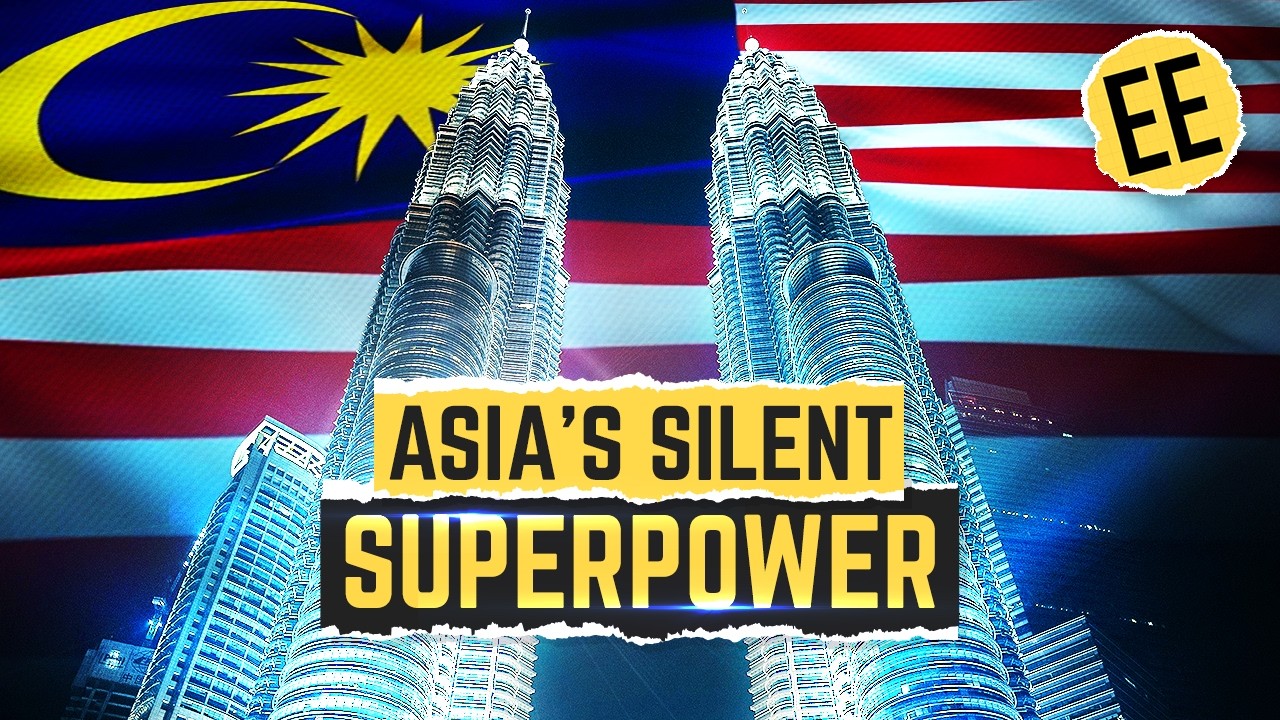
Malaysia's Strategic Ascent

Malaysia has long been a significant player in Southeast Asia, but recent developments have positioned it as one of the most strategic economies in the entire Asian region. Through a combination of robust infrastructure, strategic geographic positioning, proactive government policies, and a diversified economic base, Malaysia is emerging as a pivotal hub for trade, investment, and innovation. Its ability to navigate global challenges while maintaining steady growth underscores its rising influence in Asia’s economic landscape.A Remarkable Economic TransformationSince gaining independence in 1957, Malaysia has undergone a profound economic transformation. Once reliant on agriculture and commodity exports such as rubber and tin, the country has successfully diversified into a manufacturing and service-based economy. Today, Malaysia is a leading exporter of electrical appliances, parts, and components, with its manufacturing sector serving as a cornerstone of economic growth. This shift has elevated Malaysia from a low-income to an upper-middle-income nation within a single generation, a feat that few countries have achieved so rapidly. The country’s gross national income (GNI) per capita has grown impressively over the decades, reflecting sustained economic momentum.Global Trade and ConnectivityA key factor in Malaysia’s rise is its extensive global trade connections. The country engages with 90 percent of the world’s nations, surpassing many of its regional counterparts in trade openness. This has driven employment creation and income growth, with approximately 40 percent of jobs linked to export activities. Malaysia’s strategic development policies, which focus on outward-oriented, labour-intensive growth and investments in human capital, have ensured macroeconomic stability. The government’s emphasis on credible economic governance has also played a crucial role in maintaining investor confidence.Vision for a High-Income FutureIn recent years, Malaysia has set its sights on becoming a high-income, developed nation while ensuring sustainable shared prosperity. The government’s National Investment Aspirations (NIA), adopted in 2021, has been instrumental in reshaping the country’s investment landscape. The NIA prioritises foreign direct investment (FDI) that enhances local research and development (R&D), generates high-income jobs, and integrates Malaysia into global supply chains. This framework has laid the foundation for the New Industrial Master Plan, which aims to further boost Malaysia’s economic complexity and innovation.World-Class InfrastructureMalaysia’s infrastructure is another critical asset. The country boasts one of the most developed infrastructures in Asia, with a telecommunications network second only to Singapore’s in Southeast Asia, supporting millions of fixed-broadband, fixed-line, and cellular subscribers. Its strategic location on the Strait of Malacca, one of the world’s most important shipping lanes, enhances its commercial significance. Malaysia’s highly developed maritime shipping sector has earned it a top global ranking for shipping trade route connectivity.Resilience Amid Global ChallengesThe Malaysian economy has demonstrated remarkable resilience in the face of external challenges. In the fourth quarter of 2024, despite increasing global headwinds, Malaysia’s economy grew by 5.0 percent, driven by strong investment activities, rising exports, and sustained domestic spending. The central bank’s decision to maintain the policy rate at 3 percent reflects confidence in the country’s economic prospects, with inflation expected to remain manageable. Notably, the Malaysian ringgit appreciated by 2.7 percent in 2024, making it one of the few Asian currencies to strengthen during the year.A Forward-Looking EconomyLooking ahead, Malaysia’s growth is expected to be fuelled by robust investment expansion, resilient household spending, and a recovery in exports. The government’s Twelfth Malaysia Plan, which focuses on accelerating economic growth through selective investments and infrastructure development, is set to play a pivotal role in achieving these goals. Government-linked investment vehicles continue to invest in key sectors, further bolstering the economy.Stability and InclusivityMalaysia’s ability to manage inter-ethnic tensions pragmatically has also contributed to its economic stability. Despite occasional challenges, the country has maintained growth momentum, a testament to its inclusive development policies. The government’s focus on sustainable shared prosperity ensures that economic benefits are distributed equitably, fostering social cohesion and long-term stability.ConclusionIn conclusion, Malaysia’s strategic location, advanced infrastructure, diversified economy, and forward-thinking government policies have positioned it as a linchpin in Asia’s economic future. As the country continues to navigate global uncertainties while pursuing its vision of becoming a high-income nation, Malaysia is well on its way to becoming Asia’s most strategic economy.