












El Comercio De La República - Current news from Peru and the world in six languages

Lima -
Macron to visit Cyprus as French warships deploy to counter Iran threat

Macron to visit Cyprus as French warships deploy to counter Iran threat

President Emmanuel Macron will visit Cyprus on Monday, his office said, as France deploys warships to the Mediterranean following a drone attack on the island EU member days ago.

Read more
Milan edge derby to trim Inter's Serie A lead

Milan edge derby to trim Inter's Serie A lead

Pervis Estupinan's first-half goal proved enough for AC Milan to claim a 1-0 derby triumph at the San Siro on Sunday and cut Inter Milan's lead at the top of Serie A to seven points.

Read more
Speed cameras: Brazen rip-off or necessary?

Speed cameras: Brazen rip-off or necessary?

Germany is once again engaged in increasingly heated debate on an issue that has long since become much more than a mere traffic matter: have speed cameras actually become a convenient source of revenue for cash-strapped towns and municipalities, or are they a necessary means of protecting lives on Germany's roads? The outrage felt by many motorists is not without reason. When you see local authorities raking in millions from speeding and red light violations while at the same time complaining about austerity measures, deficits and budget shortfalls, you quickly get the impression that this is not just about monitoring, but above all about collecting money. It is precisely this suspicion that has further fuelled the debate in recent months.In fact, the sums speak for themselves. In a recent evaluation of major German cities, numerous local authorities once again generated millions in revenue from traffic monitoring. It is particularly striking that it is not just a few outliers reporting high amounts, but that a permanently lucrative level of revenue has become established in many cities. This is politically sensitive because, although fines are justified on regulatory grounds, many citizens perceive them as a fixed component of municipal financial planning. Mistrust grows even stronger in cities that like to refer to safety but at the same time do not make a clear distinction between prevention and revenue generation.Hamburg in particular is a prime example of this tension. The figures currently available there show the scale that traffic monitoring has now reached. In 2024 alone, stationary and mobile speed monitoring generated almost £47 million in revenue. By far the largest share came from mobile controls, while stationary systems generated significantly less, but still tens of millions. In addition, there was revenue from stationary red light monitoring. Even in the following year, the city remained at a very high level: speeding offences alone again generated more than 40 million euros. Anyone who reads such figures immediately understands why the term ‘rip-off’ is no longer a polemical exaggeration for many people, but a perceived finding.There is a second point that exacerbates the criticism: in many cities, these revenues are not earmarked for improving road safety, but rather flow into the general budget. This is not surprising from a legal perspective, but it is politically explosive. Anyone who expects money from speed cameras to be automatically invested in safe routes to school, intersection renovations, better lighting, cycle paths or accident prevention is often mistaken. This creates a fatal image for citizens: the local authority measures, collects and records – but whether the revenue is visibly returned to dangerous traffic spots often remains unclear. Where transparency is lacking, suspicion grows that a legitimate safety instrument has gradually become a fiscal business model.The situation becomes particularly explosive when the financial side effect is no longer just tacitly accepted, but openly discussed in consolidation debates. A current case from Halle an der Saale illustrates this problem precisely. There, the budget consolidation concept is to include additional revenue from traffic monitoring. Last year, the revenue there was already in the millions, and now further amounts are to be added. At the same time, it is officially emphasised that the primary objective remains traffic safety. It is precisely this double message that is at the heart of the problem: as soon as a city promises more safety on the one hand, but openly expects higher revenues on the other, every new measuring system becomes politically explosive.

Read more
10 vessels attacked in Hormuz Strait: analysts

10 vessels attacked in Hormuz Strait: analysts

About 10 vessels in or near the Strait of Hormuz have come under attack since Iran blocked the strategic waterway in retaliation for US-Israeli strikes, data analysis groups report.

Read more
Germany: Electric car boom remains fragile

Germany: Electric car boom remains fragile

The German market for electric cars is showing signs of life again. After the setback caused by the abrupt end of subsidies at the end of 2023, new registrations are now rising noticeably again. At first glance, this looks like the belated return of the upswing. At second glance, however, a much more complicated picture emerges: Government support is once again in the billions, the expansion of the charging infrastructure is progressing, tax advantages remain in place – and yet many buyers, especially in the private market, continue to react with remarkable caution.This is what makes the current figures so contradictory. Pure electric cars are on the rise again in terms of new registrations, but there is no sign of a broad wave of purchases. The market is growing, but not with the momentum that might be expected after years of political prioritisation, new purchase incentives and infrastructure programmes worth billions. This is precisely the core problem of German e-mobility: it is making progress, but it is not yet convincing across the board.It is true that significantly more battery electric vehicles have recently been registered. In 2025 as a whole, Germany once again proved to be an important growth driver within Europe. At the same time, the share of purely electric cars in all new registrations remains at a level that looks more like stabilisation than a breakthrough. It is also striking that the overall market is growing only moderately and that the commercial sector continues to dominate the new car business. Where company cars, fleet vehicles and tax-privileged company cars are strong, the figures often appear more dynamic than private demand actually is.This is precisely why industry observers are now looking less at the pure number of new registrations and more at the question of who is actually buying. And here, the situation is much more sobering. In the private sector, there is still a great deal of reluctance. Many households are postponing the switch, driving their combustion engines for longer or opting for petrol, diesel or a hybrid again when buying their next vehicle. This means that mass acceptance in the everyday market has not yet been achieved.

Read more
Iran names Khamenei's son as new supreme leader

Iran names Khamenei's son as new supreme leader

Iran's ruling clerics on Sunday appointed the slain leader's son, Ayatollah Mojtaba Khamenei, as the country's new supreme leader, defying threats from the United States and Israel to oppose him.

Read more
NY police say device thrown near anti-Islam protest was homemade bomb

NY police say device thrown near anti-Islam protest was homemade bomb

An improvised explosive thrown near anti-Islam protesters outside the New York mayor's residence was a viable device "that could have caused serious injury or death," police said Sunday.

Read more
Gambhir lauds India's 'courage' after T20 World Cup triumph

Gambhir lauds India's 'courage' after T20 World Cup triumph

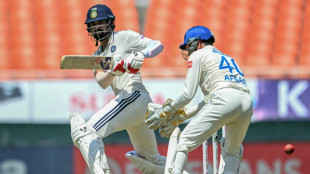
India coach Gautam Gambhir on Sunday praised his team's "bravery and courage" in racking up big totals to win a record third T20 World Cup title.

Read more
Zverev holds off Nakashima to reach Indian Wells fourth round

Zverev holds off Nakashima to reach Indian Wells fourth round

Fourth-seeded German Alexander Zverev had to go the distance to reach the fourth round of the Indian Wells ATP Masters on Sunday, holding off a determined Brandon Nakashima 7-6 (7/2), 5-7, 6-4.

Read more
Germany: Fuel rage and the 2026 election year

Germany: Fuel rage and the 2026 election year

The war in Iran and the escalation in the Gulf region are no longer just foreign policy news from afar for Germany. They are having a major impact on people's everyday lives – and in the place where many feel the economic reality most directly: at the petrol pump. As soon as production volumes, transport routes and security situations in the Middle East start to slide, the price of oil jumps, traders factor in risk premiums, and ultimately the geopolitical turmoil ends up in motorists' wallets. That is exactly what is happening at the moment. What is a strategic crisis for governments, stock exchanges and commodity markets becomes a very real cost burden for commuters, families, tradespeople, delivery services and small businesses within hours.What is particularly explosive is not only the size of the price increases, but also their speed. Just a few days ago, fuel prices in Germany were already high enough for many people. But then a new dynamic set in: within a very short time, petrol and diesel prices shot up, with diesel even exceeding the two-pound-per-litre mark at times and, in some phases, exceeding the price of petrol. This picture alone reveals the nervousness of the market. Because when diesel – despite lower energy taxes – suddenly becomes more expensive than Super E10, it shows how strongly crisis fears, expectations of shortages and market mechanisms are influencing pricing.For millions of people, this is not a theoretical debate. Those who live in rural areas, work shifts, care for relatives, drive to construction sites, deliver goods or work in the field cannot replace mobility with Sunday speeches. In many regions of Germany, the car is not a convenient additional option, but a prerequisite for work, supplies and everyday life. If the price per litre rises by double-digit cents in a few days, this not only eats into purchasing power, but also directly impacts monthly budgets that are already under pressure. Those who have to fill up three times a week feel the difference not in abstract terms, but as a real additional burden. And those who drive commercially will sooner or later pass on these costs – to customers, to consumers, to the entire price chain.

Read more