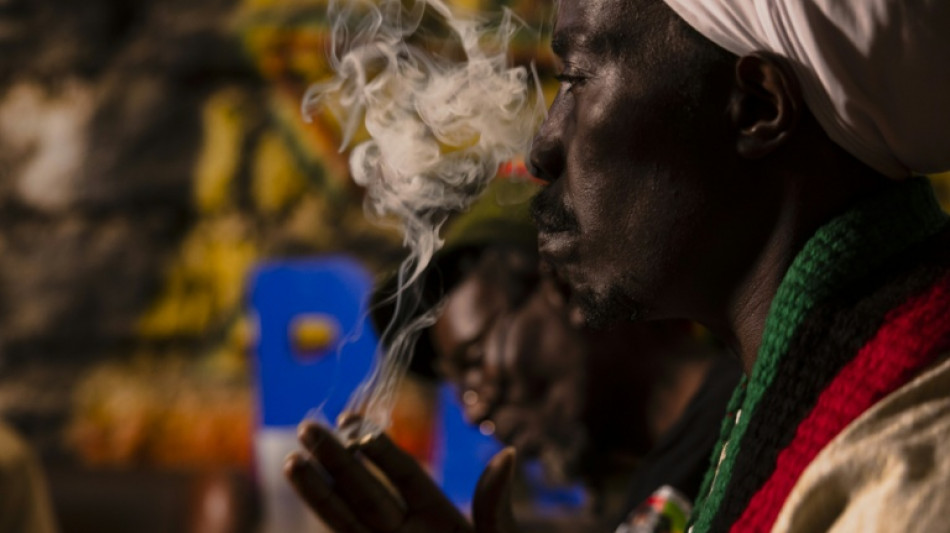
Kenya Rastafarians hope for freedom to smoke / Photo: Tony KARUMBA - AFP



Beneath portraits of their Pan-African heroes, including the man they worship as God incarnate, Ethiopia's former emperor Haile Selassie I, Kenya's Rastafarians hold hands and pray a court will let them smoke cannabis legally.
Rastafarians practise meditation using marijuana, and Kenyan members of the movement are awaiting a ruling by the High Court on July 15 on whether they will be allowed to smoke it under the right of freedom of religion.
The Rastafari movement's followers -- often recognisable by their long dreadlocks -- identify as mystical, Pan-Africanist, anti-colonialist, and vegetarian.
Kenya effectively recognised the movement in 2019 when a court ruled that expelling a school pupil because of her dreadlocks violated her religious rights.
But local Rastafarians say they are still harassed by police due to a 1994 law that makes possession of weed punishable by 10 years' imprisonment and a substantial fine.
"Every time I walk on the street, someone will come and want to intimidate me and say, 'Hey Rastaman, stop'," said Moses Mudachi Isavwa, who goes by his Rastafarian name of Ras Masinde.
The 50-year-old is proud that his dreadlocks link him to the Mau Mau, Kenya's independence fighters who fought against British colonial rule -- and who often sported dreadlocks.
But Isavwa said his dreadlocks, despite their storied history in Kenya, still attract undue persecution from authorities.
"I'm fighting for the black men and women and children who have gone through persecution, they are rotting now in the dungeon... simply because they were found with maybe a spliff of ganja," he said.
"They come to your house and search you. They don't want you to even have two spleens (joints) for smoking," said Rastafari Society of Kenya spokesperson Mwendwa Wambua, 55, who goes by Ras Prophet.
The numbers are uncertain but Wambua says the movement is growing in Kenya, especially among young people.
Days before the court verdict, he and a handful of fellow devotees gathered to sing and smoke as part of their Saturday Sabbath celebrations.
Their modest meeting place in Kibera, one of Nairobi's largest informal settlements, also houses the Haile Selassie Foundation, named after the last Ethiopian emperor.
His coronation occurred around the time the Rastafari movement was forming in Jamaica in the 1930s, and members see him as a second Jesus Christ come to save black people.
The foundation helps young people avoid crime by training them in practical skills -- weaving, beadwork -- and to teach them about their religion.
While they are still forced to mostly hide from the law, they are optimistic about the case, which has been ongoing since 2021.
As Wambua emphasised: "Smoking weed and marijuana is part of our culture.
"We must therefore defend it."
J.Vargas--ECdLR