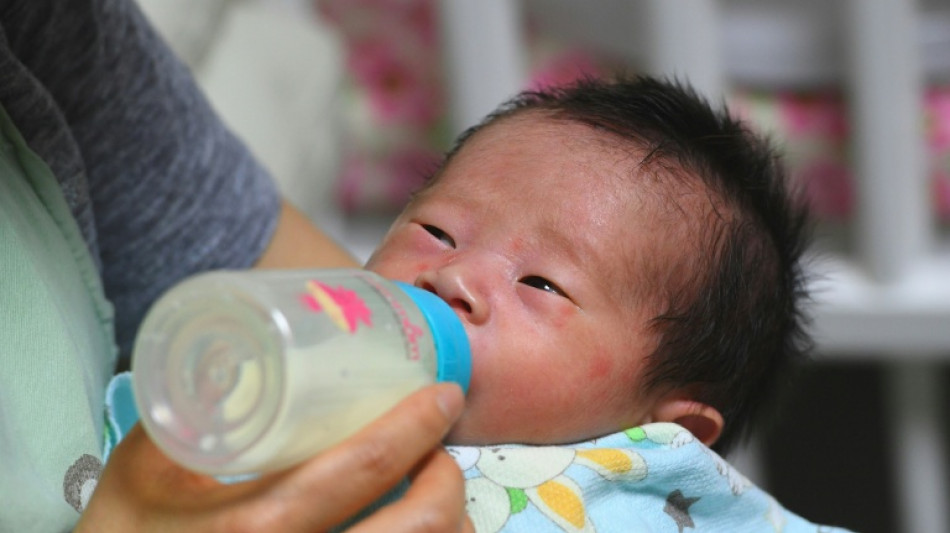
South Korea birth rate jumps but still under key fertility threshold / Photo: JUNG Yeon-Je - AFP/File


South Korea has recorded its biggest annual birth rate bump in 15 years, official figures showed Wednesday, but still far below the threshold needed to stop its population shrinking.
The country has one of the lowest birth rates in the world, pouring billions of dollars into efforts to encourage citizens to have more babies.
Yearly births rose more than six percent between 2024 and 2025, South Korea's Ministry of Data and Statistics said, the sharpest year-on-year rise since 2010.
It was the second year running that the birth rate had increased.
A major factor was the increasing number of South Koreans getting married, said official Park Hyun-jeong.
"The number of marriages gained ground for 21 straight months from April 2024 to December last year as couples who had delayed their marriages due to the Covid-19 pandemic tied the knot," Park told reporters.
Single parenthood remains stigmatised in South Korea, leading most people to have children only within marriage.
South Korea's fertility rate -- or the number of children each woman will have on average -- has ticked up slightly from 0.75 to 0.8.
That is well below the 2.1 threshold needed just to maintain South Korea's current population of 51 million.
Experts say there are multiple reasons for South Korea's low birth rate, from high child-rearing costs to a notoriously competitive society that makes well-paid jobs difficult to secure.
The double burden for working mothers of managing the brunt of household chores and childcare while also maintaining their careers is another key factor, they say.
Seoul has offered cash handouts, childcare support and infertility treatment aid to address the issue.
P.A.Cruz--ECdLR