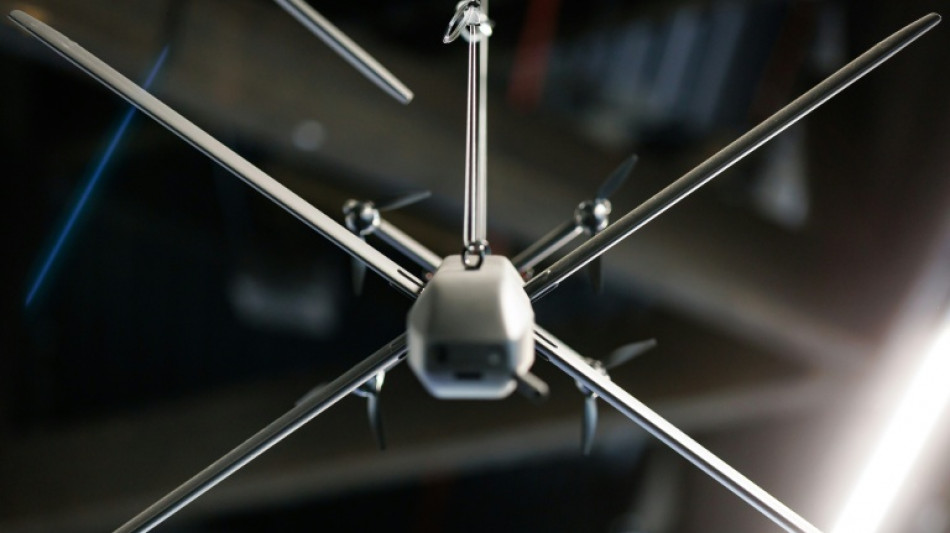
Brussels touts 'EU Inc.' company status to lure start-ups / Photo: Daniel Karmann - AFP/File

The EU unveiled Wednesday a scheme to make it much easier for innovative start-ups to launch and grow across the 27-nation bloc, as part of a push to help Europe keep up with US and Chinese economic rivals.
Dubbed "EU Inc.", the proposal for a new pan-European corporate regime is billed as a key plank in efforts to boost the bloc's competitiveness.
The new system would allow for entrepreneurs to set up a firm "within 48 hours" fully online from anywhere inside the bloc -- doing away with many cross-border bureaucratic headaches.
"It will make it drastically easier to start and to grow a business in Europe," EU chief Ursula von der Leyen told reporters.
Europe was not short of "talent", "ideas" or "ambition", she said, but business leaders looking to scale up currently have to navigate 27 national legal systems and more than 60 types of company.
The EU Inc. setup will come with several perks, but critics fear the EU-wide regime will also loosen oversight and erode workers' rights.
EU Inc. companies will require less than 100 euros ($115) and no minimum share capital to get going. They will be free to choose in which EU nation to incorporate and have access to fully digital liquidation procedures, Brussels said.
"EU Inc. strips away the bureaucracy that comes with establishing a business. Founders will be able to focus on what matters: entering new markets and winning customers," said EU justice commissioner Michael McGrath.
Though open to anyone, the new voluntary legal regime is geared towards innovative start-ups, which will also benefit from simplified insolvency procedures.
The commission said it will further explore the possibility of allowing "100 percent cross-border" remote work "for innovative start-ups and scale-ups" across the EU.
Reinhilde Veugelers, of think tank Bruegel, said the goal was "improving (Europe's) innovation capacity because that is the most important driver for competitiveness".
"Fast and easy recognition should make it easier... for companies to grow on an EU scale," Veugelers said.
The new scheme, known more broadly as the "28th regime", will become law only after member states and the European Parliament negotiate and approve a final text -- something the commission urged be done by the end of 2026.
EU leaders are expected to discuss the proposal during a Thursday summit in Brussels, although wars in Ukraine and the Middle East will likely dominate their talks.
- 'Threat' or treat -
How popular the new regime proves remains to be seen, with trade unions and businesses already airing concerns.
Campaigners including Olivier Hoedeman of Corporate Europe Observatory said the new system's speed could make it difficult to properly scrutinise new companies.
"The 28th regime poses a significant threat to Europe's social model," Hoedeman said.
Organisations representing European workers are also worried about a move to allow companies to offer share options to staff instead of wages.
"We cannot expect that the promise of the future success of a company be used to justify wage exploitation in the present," Esther Lynch of the European Trade Union Confederation said in a statement.
The commission has insisted labour law will not be touched by the proposal and that any business will have to follow the rules based on where they are headquartered.
Reacting to a leaked draft, industry group EU Inc -- which inspired the name of the commission proposal -- said the plans fell short.
It "fails on the actual main goal: creating one true standard across Europe that creates legal certainty for our startups", since it defers legal authority to national courts, "aka 27 flavours of interpretation", it said.
To address that, presenting the final proposal Wednesday the commission urged member states to consider setting up specialised judicial chambers or courts with the authority to handle EU Inc. disputes.
H.León--ECdLR