OpenAI co-founder under fire in Musk trial over $30 bn stake / Photo: Karl Mondon - AFP


Following high-profile testimony from billionaire Elon Musk last week, one of OpenAI's co-founders testified Monday in the California lawsuit brought by the world's richest man against the creators of ChatGPT.
Musk's lawyers called Greg Brockman to the stand in an effort to show the jury that OpenAI's founders manipulated their original benefactor to transform a philanthropic mission into a money-making enterprise worth hundreds of billions of dollars.
Musk is seeking to force his rivals to revert to a purely non-profit foundation. The outcome of the case could shape the future of OpenAI, the fast-rising generative AI giant now valued at over $850 billion and preparing for an IPO.
OpenAI CEO and co-founder Sam Altman, who in 10 years has gone from being Musk's protege to a bitter rival, is not expected to take the stand until the week of May 11.
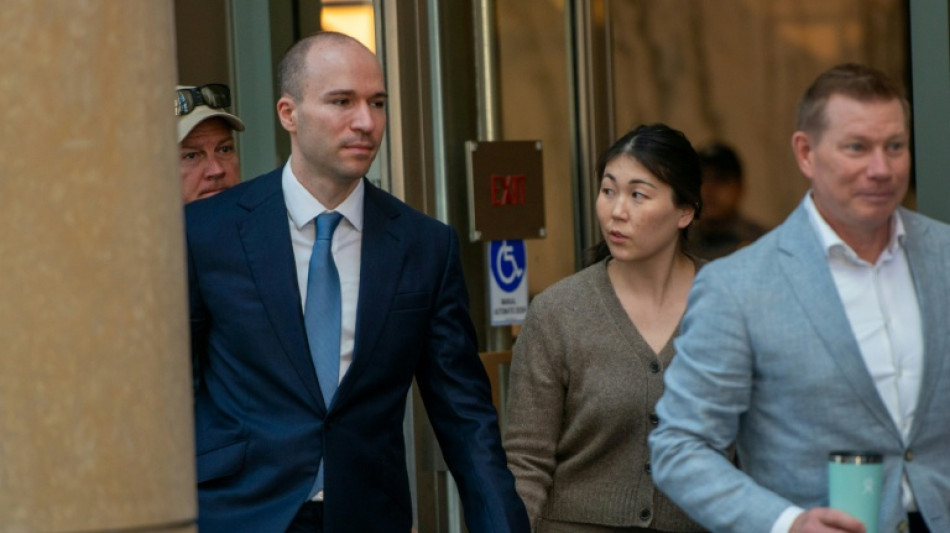
On Monday, it was his closest ally, Brockman, who sat in the witness chair at the Oakland courthouse near San Francisco, with Altman looking on.
From the outset, Musk's attorney Steven Molo got the visibly tense 38-year-old engineer to acknowledge that he holds a stake in OpenAI now valued at $30 billion, without having invested anything himself.
Molo brandished a 2015 email in which the OpenAI co-founder had pledged to donate $100,000 to help attract other Silicon Valley donors.
"I did not end up donating, that's true," Brockman conceded.
AI "is going to be the most important technological shift in human history...This is really about humanity as a whole," Brockman told the court, insisting that OpenAI's commercial pivot remained faithful to its original philanthropic mission.
He argued that the company had not plundered the non-profit foundation to which OpenAI is still attached.
"We have created the most well-resourced nonprofit in history, with over $150 billion worth of equity value," he said.
Over three days of testimony last week, Musk portrayed himself as a selfless early supporter of OpenAI, saying he contributed $38 million between 2016 and 2020 before being sidelined.
The head of SpaceX and Tesla argued that he wanted to counterbalance Google's dominance and ensure that transformative AI technology remains free from profit-driven pressures.
- 'Most hated men' -
OpenAI's legal team asked the judge late Sunday to allow Brockman to show the jury a message allegedly sent by Musk on the eve of the trial, following a failed proposal to settle the case outside of court.
According to the request, which was seen by AFP, Musk said: "By the end of this week, you and Sam will be the most hated men in America. If you insist, so it will be."
The judge denied the request, ruling that the issue should have been raised while Musk was still on the stand.
OpenAI's lawyers have sought to convince the jury that the billionaire is using the courts for personal revenge and to slow down a competitor, having launched his own AI lab, xAI, in 2023 and its chatbot Grok.
Musk recently folded xAI into SpaceX, which is reportedly valued at about $1.25 trillion and may also pursue a public offering.
Last week, Musk -- a major Trump donor who was seen diligently taking handwritten notes -- did not miss a moment of the proceedings.
- Global competition -
The stakes are high. If Judge Yvonne Gonzalez Rogers -- who will make the final ruling after hearing the jury's opinion -- ultimately sides with Musk, OpenAI's IPO could be jeopardized.
That could reshape the global AI landscape, where major players like Google and Chinese tech firms are competing aggressively.
OpenAI is also facing growing competition from Anthropic and its Claude model. Their rapid growth is beginning to generate tens of billions of dollars in annual revenue.
But those amounts still fall far short of the hundreds of billions in investment still needed to recruit talent, buy processors and build and power the massive data centers driving the AI revolution.
C.Cabrera--ECdLR