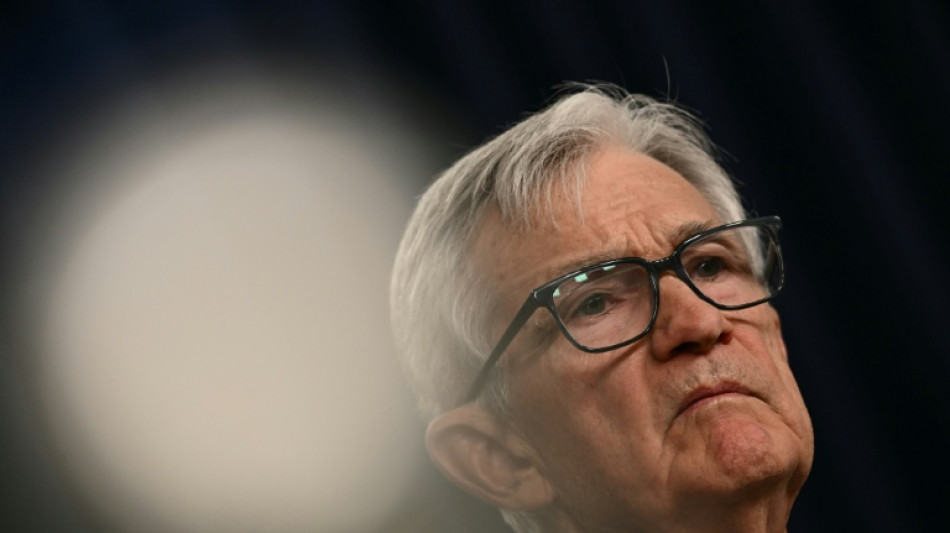
US Fed set to hold rates steady again on cost hikes from Mideast war / Photo: Brendan SMIALOWSKI - AFP/File
The US central bank is widely expected to keep interest rates unchanged at its policy meeting next week, as energy prices stay high and supply chains snarled due to war in the Middle East.
The Federal Reserve's two-day meeting, starting Tuesday, could be chairman Jerome Powell's last at the helm of the independent institution.
But it takes place against a tricky backdrop. Powell's successor has faced a bumpy road to confirmation, while policymakers battle competing pressures as steeper fuel prices drive inflation and job market worries linger.
Fed officials are set to keep rates steady at a range between 3.50 percent and 3.75 percent, extending their pause since the start of the year.
"We still have a very high level of uncertainty on what's happening in the Middle East," KPMG senior economist Kenneth Kim told AFP, ahead of upcoming peace talks.
Oil and gasoline prices remain elevated even if they have peaked, meaning "there's certainly an energy shock that's still impacting both consumers and businesses," he said.
The Fed has a dual mandate of maintaining price stability and low unemployment. It tends to keep interest rates high to curb inflation or lower them to spur growth, meaning that current conditions pull officials in different directions.
Navy Federal Credit Union Chief Economist Heather Long expects Powell to be "non-committal" on the path of rates, as the full impact from the war on Iran remains unknown.
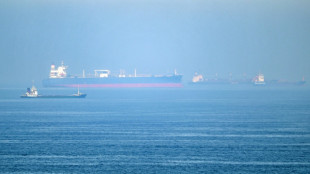
The oil price hikes came after US-Israeli strikes targeting Iran from February 28 sparked Tehran's retaliation in virtually closing the Strait of Hormuz -- a key waterway for energy transit.
- Containing inflation -
Fed officials will likely focus more on containing inflation than the jobs market this meeting, with the war entering its ninth week.
The strait is also a key passage for fertilizers, and disruptions threaten to hit food production.
Already, US consumer inflation reached its highest level in nearly two years in March at 3.3 percent as energy costs rocketed.
Fed Governor Christopher Waller, who earlier backed lower rates to support employment, indicated this month that a prolonged conflict could make it hard for the central bank to cut rates this year.
If there were high inflation and a weak labor market, one would have to balance risks on both sides.
This "may mean maintaining the policy rate at the current target range if the risks to inflation outweigh those to the labor market," he told an Alabama event.
KPMG's Kim said solid hiring recently "gives the Fed some cushion" to temporarily focus more on prices.
Analysts will monitor if the Fed signals in its post-meeting statement that rate hikes are a possibility.
- 'Critical juncture' -
The Fed is also taking its next steps under intense political scrutiny.
President Donald Trump has made no secret of his wish for lower interest rates, and regularly slammed Powell for not cutting them aggressively.
Beyond rhetoric, Trump has sought to oust Fed Governor Lisa Cook over claims of mortgage fraud. The Supreme Court is set to rule on whether he can fire her.
Meanwhile, Trump's choice of new Fed chairman -- Kevin Warsh -- has faced a bumpy road to confirmation.
Republican senator Thom Tillis on the Senate Banking Committee vowed to block Fed appointments until a Justice Department probe into the Fed and Powell is resolved, setting up a potential impasse on the panel Warsh needs to clear.
But the Department of Justice said Friday it would drop the investigation linked to renovation costs overruns, potentially paving the way for Warsh's ascendance.
Asked by journalists Saturday about the DOJ's move, Trump said he still wants to look into the cost of the Federal Reserve building renovations, which he has claimed is too high.
"I tell you, I want to find out. I have an obligation to find out," he said.
Warsh has repeatedly pledged to remain independent if confirmed.
"We're at a critical juncture for the Fed," EY-Parthenon chief economist Gregory Daco told AFP.
"It may be that under Warsh, we're going to see less Fed transparency, less Fed communication than we had in the past," he said, referring to Warsh's confirmation hearing testimony.
Powell's chairman term expires May 15, and he originally intended to stay on the Fed's board of governors until the probe on him is completed.
All eyes are on his future plans at his scheduled press briefing Wednesday.
J.Hernández--ECdLR