Pressure grows on UK's Starmer to quit as PM
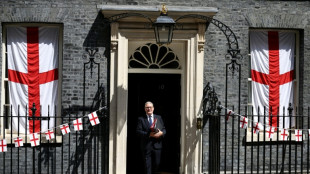
Britain's Prime Minister Keir Starmer on Monday vowed to prove his doubters wrong and stem mounting calls for him to step down after disastrous local and regional elections for his ruling Labour party.
But more than 50 of his own MPs were unconvinced by his pledge to make the party bolder and better to assuage disgruntled voters impatient for change, and called for him to quit.
By Monday evening, at least 55 of the 400 or so Labour members of parliament urged him to step down, including three government aides who resigned their positions.
Joe Morris, who was a parliamentary private secretary to Health Secretary Wes Streeting -- widely rumoured to be considering a leadership challenge -- wrote on X that it was "now clear that the prime minister no longer has the trust or confidence of the public to lead this change".
Another, Tom Rutland, who was an aide to Environment Secretary Emma Reynolds, said Starmer had "lost authority" among Labour MPs and "will not be able to regain it".
Under party rules, any challenger would need the support of 81 Labour MPs -- 20 percent of the party in parliament -- to trigger a leadership contest.
But that would likely spark a damaging bout of infighting, with MPs from the left and right of the party battling to position their preferred candidate or shore up Starmer.
- Doubters -
Starmer, 63, only came to power in July 2024 after a landslide election win that ended 14 years of Conservative party rule dominated by austerity measures, infighting over Brexit and its Covid response.
But he has swerved from one policy misstep to another, and became mired in a scandal over the appointment, and sacking, of Peter Mandelson as UK ambassador to Washington, after revelations about the envoy's ties to sex offender Jeffrey Epstein.
He has not yet spurred economic growth to help British citizens suffering with the cost of living, but has been praised for resisting US President Donald Trump over Iran.
Last week, voters issued a damning indictment of his 22 months in power in local and regional elections, which saw huge gains for the hard-right Reform UK party and the left-wing populist Greens at Labour's expense.
Labour also lost control of the devolved Welsh parliament to nationalists Plaid Cymru for the first time since it was set up in 1999, and failed to make up ground against the Scottish National Party at the Scottish Parliament.
In a crunch speech on Monday, Starmer acknowledged the public's frustration with the state of the country, politics and his leadership.
"I know I have my doubters, and I know I need to prove them wrong, and I will," he said.
He promised "a bigger response" rather than "incremental change" in areas such as economic growth, closer European ties and energy.
He pledged to fully nationalise British Steel and, in the strongest condemnation since Britain's acrimonious departure from the European Union in 2020, said Brexit had left the UK poorer, weaker and less secure.
Nigel Farage, who leads Reform UK and is tipped as a possible future prime minister, was a "chancer" and "grifter" whose virulent pro-Brexit campaign had taken Britain "for a ride", he said.
"If we don't get this right our country will go down a very dark path," he added.
- Who succeeds? -
After the speech, MP Catherine West, who had threatened to trigger a leadership challenge on Monday, said she was instead collecting the names of Labour MPs who want Starmer to set a timetable for the election of a new leader in September.
It has long been rumoured that Health Secretary Streeting and former deputy prime minister Angela Rayner could try to oust Starmer.
But neither is universally popular within Labour.
Rayner, who has stopped short of calling for Starmer to quit, said in a speech of her own Monday that "what we are doing isn't working, and it needs to change".
Another much-touted possible contender, Andy Burnham, the mayor of Greater Manchester, is currently unable to challenge as he does not have a seat in parliament.
The absence of an obvious successor means Starmer could still hold on, particularly with the next general election not expected until 2029.
Starmer is due to lay out more detailed legislative plans in the King's Speech on Wednesday.
R.Flores--ECdLR